Klaviyo Shopify App: Setup, Features & Best Practices (2026)
Server-side Klaviyo conversion tracking solves critical revenue loss caused by standard pixel limitations in today's privacy-first environment. While traditional tracking fails to capture user journeys across devices and browsers due to iOS restrictions and cookie blocking, server-side implementation ensures consistent user identification and proper flow triggering. Recent data shows implementations achieving 215% more identifiable sessions and 185% revenue increase from recovery flows.

Klaviyo Shopify App: Setup, Features & Best Practices (2026)
Email and SMS remain two of the highest-ROI channels for Shopify brands in 2026. At the center of that ecosystem sits Klaviyo, the default choice for ecommerce businesses that want to own their customer relationships and drive repeat revenue.
But simply installing the Klaviyo Shopify app is not enough anymore.
Tracking gaps, missing events, and incomplete cart data quietly limit flow performance, especially abandoned cart and browse abandonment emails. This guide walks through how Klaviyo works with Shopify, how to set it up properly, and how to maximize results using best practices that actually reflect how ecommerce tracking works today.
What the Klaviyo Shopify App Does
The Klaviyo Shopify app connects your store data directly to Klaviyo. It syncs customers, products, orders, and behavioral events so you can trigger emails and SMS based on real user actions.
Out of the box, this includes events like product viewed, added to cart, checkout started, and placed order. These events power Klaviyo’s core flows such as abandoned cart, abandoned browse, post-purchase, win-back, and replenishment campaigns.
When the data is complete and reliable, Klaviyo becomes a powerful revenue engine. When it’s not, flows quietly underperform.
How to Set Up Klaviyo with Shopify (Correctly)
Setup starts inside Shopify. You install the Klaviyo app, connect your account, and allow data sharing permissions. Shopify then begins syncing historical and real-time data into Klaviyo.
Once connected, Klaviyo automatically creates default events and suggests prebuilt flows. This part is straightforward and works well for most stores.
Where issues arise is not installation, but data quality.
The Hidden Problem: Missing or Incomplete Events
In 2026, many Shopify stores unknowingly miss critical events.
Browser restrictions, consent banners, ad blockers, and checkout customizations can prevent Klaviyo from receiving key signals. The most common issue is missing or incomplete abandoned cart data.
When the “Added to Cart” or “Checkout Started” event doesn’t fire, Klaviyo has nothing to trigger on. The result is fewer abandoned cart emails sent, even though carts are being abandoned.
This is one of the biggest reasons stores leave email revenue on the table.
Core Klaviyo Features That Matter Most
Klaviyo offers many features, but a few drive the majority of ecommerce revenue.
Flows are the backbone. Abandoned cart, browse abandonment, post-purchase, and win-back flows generate consistent, automated income.
Segmentation allows you to target customers based on behavior, purchase history, and engagement, enabling more relevant messaging.
Campaigns are best used for launches, promotions, and announcements, but they rarely outperform flows long-term.
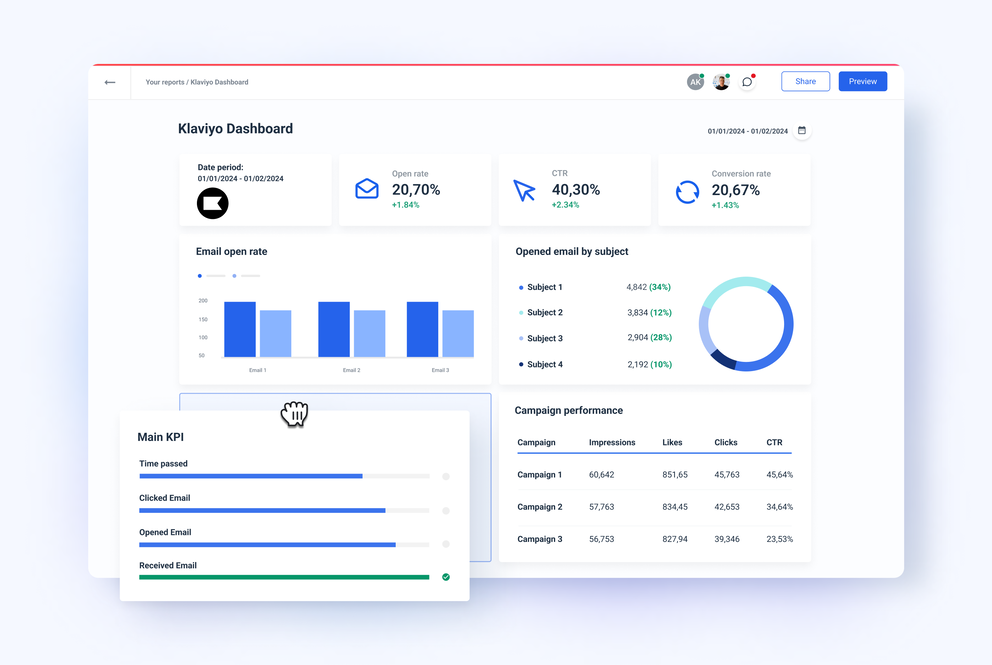
Analytics inside Klaviyo show flow-level revenue, conversion rates, and engagement metrics, but those numbers are only as accurate as the events feeding them, which is why many businesses turn to app development consulting to get a better functioning setup.
Best Practices for Klaviyo Flows in 2026
The highest-performing Shopify stores focus on a small number of high-impact flows and optimize them deeply.
Abandoned cart flows should trigger quickly, use dynamic product blocks, and escalate urgency over time. Browse abandonment works best when product view data is clean and complete.
Post-purchase flows should focus on education, cross-sell, and retention rather than immediate discounts. Win-back flows are most effective when based on true inactivity, not guessed timelines.
None of this works well if the underlying events are unreliable.
Why Accurate Event Tracking Is Now Critical
Email flows depend on behavioral triggers. If the trigger never fires, the email never sends.
In 2026, relying solely on browser-based tracking for Klaviyo is risky. Many abandoned carts never generate an event Klaviyo can see, especially on mobile and iOS devices.
That’s where first-party, server-side tracking becomes a major advantage.
How the wetracked.io Klaviyo Plugin Improves Results
The wetracked.io Klaviyo plugin is built to fix the exact problem most Shopify stores don’t realize they have.
Instead of relying only on browser events, wetracked.io captures cart and checkout activity server-side and sends clean, enriched events directly into Klaviyo.
That means abandoned carts are captured even when browser tracking fails.
Stores using the wetracked.io Klaviyo plugin typically see every abandoned cart captured, not just the ones that slip past ad blockers and privacy restrictions.
The result is tangible and fast:
- Every abandoned cart is captured, often 2× more than before
- More abandoned cart emails are sent
- Around 27% increase in email flow revenue
- Results become visible in as little as 7 days
Because the data is first-party and reliable, Klaviyo flows trigger consistently and performance stabilizes.
More events in means more revenue out.
Why This Matters More Than Ever
Email and SMS are often the most controllable channels in ecommerce. Paid ads fluctuate, but owned channels compound.
If your abandoned cart flow is under-triggering, you’re losing revenue every day without noticing. Fixing tracking almost always outperforms endlessly tweaking copy or design.
Better data beats better guesses.
Common Mistakes to Avoid
Many merchants assume Klaviyo is underperforming when the real issue is missing data.
Others layer multiple tracking scripts that conflict with each other, causing duplicate or dropped events.
Another mistake is judging Klaviyo performance based on Ads Manager numbers alone, without realizing that email attribution depends on accurate backend events.
Final Takeaway
The Klaviyo Shopify app is a powerful foundation, but in 2026 it’s only as good as the data feeding it.
If you want abandoned cart flows to fire consistently, email revenue to scale predictably, and results to improve without endless experimentation, accurate first-party tracking is essential.
For Shopify brands that want to unlock the full potential of Klaviyo with minimal setup, the wetracked.io Klaviyo plugin closes the tracking gaps that quietly limit most stores and turns missed carts into real revenue.
Implementing server-side Klaviyo conversion tracking is no longer optional for e-commerce businesses seeking to maximize revenue from abandoned cart flows. As privacy measures continue to strengthen, traditional pixel tracking becomes increasingly unreliable. By upgrading to server-side tracking, businesses can ensure accurate customer journey mapping, reliable flow triggers, and significantly improved recovery rates – ultimately leading to substantial revenue growth.