.png)
If your ad platforms say everything is working, but your bank account says something else, your attribution tool is usually where the argument starts.
Northbeam and Triple Whale both promise a clearer answer. They pull in customer data, conversion data, ad platform data, and store data so ecommerce teams can see what is actually pushing people to buy. On paper, they look similar. In practice, they are built for different types of teams.
Northbeam is the more serious measurement tool. It is best for brands that want to question platform-reported numbers, compare attribution models, and make cleaner paid media decisions.
Triple Whale is the broader ecommerce dashboard. It is best for Shopify and DTC teams that want attribution, profit, revenue, customer behavior, and daily performance in one place.
This comparison breaks down where each platform wins, where each one feels heavy, and when an ad tracking tool like wetracked.io may be the better choice.
Get the better alternative to Northbeam
Northbeam vs Triple Whale at a glance
Northbeam and Triple Whale are both attribution tools for ecommerce brands, but they speak to slightly different buyers.
Northbeam is mainly built for marketing teams that care most about measurement. It helps brands understand which channels, campaigns, and touchpoints are actually contributing to sales. The platform puts a lot of weight on conversion tracking, customer data, and attribution models, so it is often a better fit when the main question is, “What is really driving purchases?”
Triple Whale is built for Shopify and DTC brands that want one place to track store performance, ad performance, customer behavior, and daily business metrics. Attribution is part of the product, but it sits inside a wider ecommerce analytics platform.
The simplest way to compare them is this:
Northbeam is the better-known choice for deeper marketing attribution.
Triple Whale is the better-known choice for ecommerce reporting with attribution included.
That difference shapes how each tool is used. Northbeam is usually closer to the paid media team. It helps marketers compare channels, test assumptions, and understand performance beyond native ad platform data.
Triple Whale is closer to the ecommerce operating dashboard. It helps founders, operators, and marketers see how revenue, spend, profit, and customer behavior connect in one place.
So, if you are choosing between Northbeam vs Triple Whale, start with the problem you need to solve. If attribution accuracy is the main issue, Northbeam will usually feel more focused. If you need a wider view of ecommerce performance, Triple Whale will usually feel more natural.
Triple Whale vs Northbeam: attribution accuracy
Both tools are trying to fix the same problem. Native advertising platforms often overclaim results, especially when several channels touch the same customer before a purchase. Meta, Google, TikTok, email, and affiliate campaigns can all take credit for the same sale. That makes ad spend harder to judge and scaling decisions riskier.
Northbeam is more focused on marketing attribution accuracy. It uses first-party data, conversion data, and different attribution models to show how each channel contributes to revenue. The goal is to give paid media teams a cleaner view of what is actually driving purchases, not just what each platform reports inside its own dashboard.
Triple Whale also uses first-party data and its own tracking pixel to improve attribution. It pulls data from advertising platforms and ecommerce systems, then brings that data into a wider reporting view. This gives teams a useful read on performance, but attribution is only one part of the product.
The main difference is depth.
Northbeam is usually the stronger choice when a team needs to compare attribution models, review channel performance, and make budget decisions based on cleaner conversion data. It is built for teams that want to challenge platform-reported numbers.
Triple Whale is better when attribution needs to sit beside profit, revenue, customer behavior, and store performance. It gives ecommerce teams a broader view, even if Northbeam goes deeper on the attribution side.
So, if attribution accuracy is the biggest reason you are comparing these tools, Northbeam has the edge. If you want attribution as part of a larger ecommerce reporting setup, Triple Whale may feel easier to use day-to-day.
Data sources and tracking setup
Northbeam is more measurement heavy from the start. It connects data from channels like Meta, Google, TikTok, email, and your ecommerce store, then uses that data to model how your marketing efforts lead to purchases. It is built for teams that want more control over attribution logic and want to compare results beyond Google Analytics or native platform reporting.
Triple Whale setup is usually more familiar for Shopify brands. Teams connect their store, ad platforms, and Triple Whale Pixel, then use the dashboard to track revenue, spend, profit, customer journeys, and other key metrics. It is less about building a custom measurement system and more about getting ecommerce data into one place.
Both tools also lean on better data collection than basic browser tracking. That is important because privacy changes, cookie limits, and ad platform gaps can make conversion data less reliable. Server-side tracking helps reduce some of those gaps by sending events more directly and giving attribution tools a stronger data foundation.
The difference is how each product uses that data.
Northbeam uses data sources mainly to improve attribution and budget decisions.
Triple Whale uses data sources to support a broader ecommerce reporting view.
So, if you are comparing third-party attribution tools mainly because your ad reporting feels unreliable, Northbeam will usually feel more focused. If you want tracking, reporting, and store performance in one place, Triple Whale setup may be easier to manage.
Ecommerce reporting and dashboard experience
Northbeam gives marketers a more focused reporting experience. The dashboard is built around attribution data, channel performance, campaign analysis, and media efficiency. It is a better match for teams that want to understand where ad spend is working, where it is being wasted, and how performance changes across different attribution views.
Triple Whale feels broader. It is closer to a daily ecommerce dashboard, where revenue, profit, spend, customer behavior, and marketing performance sit together. For Shopify teams, this can make the platform easier to use across more roles. A founder, marketer, and operator can all look at the same account and find the key numbers they care about.
The most important difference is how each tool frames the dashboard.
Northbeam is more useful when the dashboard needs to support paid media decisions. It helps teams compare channels, read attribution data, and understand how campaigns perform beyond what Google Ads or Meta report by default.
Triple Whale is more useful when the dashboard needs to support daily ecommerce decisions. Its reporting is built around store performance as much as marketing performance.
Triple Whale Sonar adds another layer here. Instead of only showing performance inside the dashboard, Sonar can send enriched customer and conversion data back into advertising platforms like Google Ads. That helps teams improve tracking and campaign optimization using real-time data.
So, the choice comes down to workflow. Northbeam is better for marketers who want a customizable dashboard centered on attribution. Triple Whale is better for ecommerce teams that want performance reporting, store metrics, and ad data in one place.
Marketing mix modeling and incrementality testing
Northbeam is stronger when measurement needs to go beyond click paths. Its MMM and incrementality features are built to help teams understand whether ad spend is actually creating revenue, not just getting credit for revenue that would have happened anyway.
That is an important step up from standard attribution. A basic attribution method can show which ad, channel, or campaign appeared before a sale. But it cannot always prove whether that touchpoint caused the sale. Even linear attribution, which spreads credit across several touchpoints, can still miss the bigger picture.
Northbeam is useful when teams want to compare attribution models against broader business signals. It can help marketers look at spend, sales, channel mix, and test results together instead of relying only on platform reported conversions.
Triple Whale offers a more ecommerce friendly version of this idea. Its measurement features are built around helping Shopify brands understand the full customer journey, including how people move across multiple sessions before buying.
That makes Triple Whale helpful for teams that want to track users across the buying process and connect attribution with store performance. Instead of treating MMM, attribution, and incrementality as separate reports, Triple Whale brings them closer to the same operating view.
The main tradeoff is depth versus workflow.
Northbeam is better for deeper measurement work. It is the stronger option for teams that want to test marketing impact, question platform data, and model budget decisions more carefully.
Triple Whale is better for daily ecommerce decisions. It gives teams enough measurement depth while keeping the data closer to revenue, profit, and customer behavior.
Creative analytics
Meta, TikTok, and Google can tell you which ads are getting clicks and conversions inside their own systems. The problem is that each platform judges performance from its own view. That makes it harder to compare creative performance across channels and understand which messages, hooks, offers, and formats are actually moving buyers.
Northbeam is better when creative analysis needs to connect directly to attribution. It helps teams see how specific ads and campaigns influence revenue, not just engagement. That gives paid media teams a cleaner way to judge which creatives deserve more budget and which ones are only getting credit inside one platform.
Triple Whale also helps teams review creative performance, but it places that data inside a wider ecommerce dashboard. This is useful for brands that want to compare creative results with revenue, profit, customer behavior, and store performance in the same place.
The difference is how deep you want to go.
Northbeam is better for creative attribution. It gives marketers more dedicated data around how ads contribute to sales across the buying journey.
Triple Whale is better for creative reporting inside the broader ecommerce picture. It helps teams compare ads against other platforms, store data, and key business metrics.
If creative testing is a major part of your marketing game, Northbeam will usually give you a more focused view. If creative is one part of a wider ecommerce reporting workflow, Triple Whale may be easier for more people on the team to use.
Customer journey visibility
Northbeam is built for teams that want detailed analysis of how buyers move across marketing channels before they purchase. Instead of looking only at the final click, it helps marketers understand how paid social, paid search, email, affiliates, and other touchpoints work together. That gives teams a better read on ad attribution and marketing effectiveness.
This is useful when the buying path is not simple. A customer may see a Meta ad, search the brand later, click a Google ad, visit again through email, and buy days after the first touch. Northbeam’s advanced attribution helps teams see those steps more clearly and spot key trends that would be easy to miss in platform reports.
Triple Whale gives teams a broader view of the customer journey inside the ecommerce business. It connects store data, customer behavior, revenue, and marketing performance, so teams can see how different touchpoints relate to sales and profit.
The difference is the type of insight each tool is best at giving.
Northbeam is stronger for teams that want to understand how different channels contribute to effective marketing campaigns. It is better for deeper attribution work, media mix modelling, and budget decisions.
Triple Whale is stronger for teams that want actionable insights across ecommerce performance. It helps teams connect journey data with day-to-day business metrics, not just campaign performance.
If your main goal is to understand channel impact across the full path to purchase, Northbeam has the edge. If you want journey visibility inside a wider ecommerce dashboard, Triple Whale will usually feel more practical.
Integrations with ecommerce and ad platforms
Both Triple Whale and Northbeam connect with major ecommerce and advertising platforms, including Shopify, Meta, Google Ads, TikTok, and other channels used by DTC brands. The difference is what each platform does once that data is inside the system.
Northbeam is more focused on measurement quality in ecommerce analytics. It combines first-party data from your store and customer journey with ad platform data to give teams a clearer view of performance. This helps marketers compare in-platform metrics against Northbeam’s own attribution view instead of trusting every number Meta, Google, or TikTok reports.
Triple Whale is built more around centralization. It pulls ecommerce, customer, marketing, and ad data into one dashboard, so teams can track revenue, profit, spend, attribution, and channel performance together. Triple Whale also supports zero-party data through survey and customer feedback integrations, which can add more context to attribution when buyers explain how they discovered the brand.
This is useful for triple attribution analysis, where teams want to compare platform reported data, first-party tracking, and customer reported data side by side.
Northbeam is better when accurate tracking and attribution depth matter most.
Triple Whale is better when the team wants integrations to support a wider ecommerce reporting system.
Ease of setup and use
Triple Whale is usually easier to get moving, especially for Shopify brands. The product is built around a more user-friendly platform, with dashboards that make sense to founders, marketers, operators, and finance teams without much training.
Northbeam can take more work. The setup is not difficult for every team, but the platform has a steeper learning curve because it is built for deeper measurement. To get the most value from it, teams need clean tracking, clear naming rules, and a good understanding of how attribution affects reporting.
That is why Northbeam is often a better match for enterprise brands, advanced paid media teams, and companies with strong data teams. If you have data scientists or analysts who can work with the reporting, test assumptions, and compare models, Northbeam can give you more control over performance measurement.
Triple Whale is more approachable for teams that want answers faster. It gives ecommerce brands a clear view of revenue, spend, profit, customer behavior, and channel performance without forcing every user to think like an analyst.
The choice comes down to how your team works.
Choose Northbeam if you have the team and process to support a more advanced attribution setup.
Choose Triple Whale if you need ecommerce reporting that more people can use day to day.
Pricing comparison
Northbeam pricing is less friendly to smaller brands. The Starter plan starts at $1,500 per month, while Professional and Enterprise require a custom quote. The page also ties plan fit to media spend, which makes Northbeam feel more aligned with brands that already have a serious paid media budget.

Triple Whale pricing is more flexible at the entry level. It has a free plan, then paid packages based on annual GMV and the feature set you need. This makes it easier for smaller ecommerce teams to start with basic reporting, then move into deeper measurement as the business grows.

The bigger difference is how each platform prices value.
Northbeam charges for deeper attribution, more advanced measurement, and higher data needs. It makes more sense when the team has enough ad spend to justify a more serious attribution setup.
Triple Whale prices around ecommerce scale. As your GMV grows, your plan changes with it. That can work well for Shopify brands that want reporting, attribution, store data, and customer insights in one place.
So, Northbeam is usually the more expensive choice from the start. Triple Whale gives brands more room to begin smaller, although costs can rise as revenue and feature needs grow.
Northbeam vs Triple Whale: which one should you get?
Get Northbeam if attribution is the main reason you are shopping for a new platform.
Northbeam is the better choice when your team needs a deeper view of channel performance, campaign impact, and paid media efficiency. It is built for brands that already spend enough on ads to justify a more advanced measurement setup.
Choose Northbeam if:
- You care more about attribution depth than ecommerce reporting
- Your paid media team needs cleaner data for budget decisions
- You want to compare different attribution models
- You need stronger support for incrementality testing and media mix modeling
- Your current ad platform numbers feel inflated or hard to trust
- You have enough ad spend to justify a higher starting price
- Your team is comfortable working with more advanced reporting
Get Triple Whale if you want attribution inside a broader ecommerce dashboard.
Triple Whale is the better choice when your team needs one place to see revenue, profit, spend, customer behavior, and ad performance. It is easier to roll out across more roles because it is not only built for media buyers.
Choose Triple Whale if:
- You run a Shopify or DTC brand
- You want ecommerce reporting and attribution in the same place
- You need a clearer view of profit, revenue, and customer data
- You want a dashboard that founders, marketers, and operators can all use
- You care about daily business visibility as much as ad attribution
- You want a lower entry point than Northbeam
- You do not have a large analytics team
In short, choose Northbeam if you need deeper attribution. Choose Triple Whale if you need a wider ecommerce performance dashboard.
Why wetracked.io is a simpler alternative for ad tracking
Northbeam and Triple Whale are strong tools, but they can be more than some brands need.
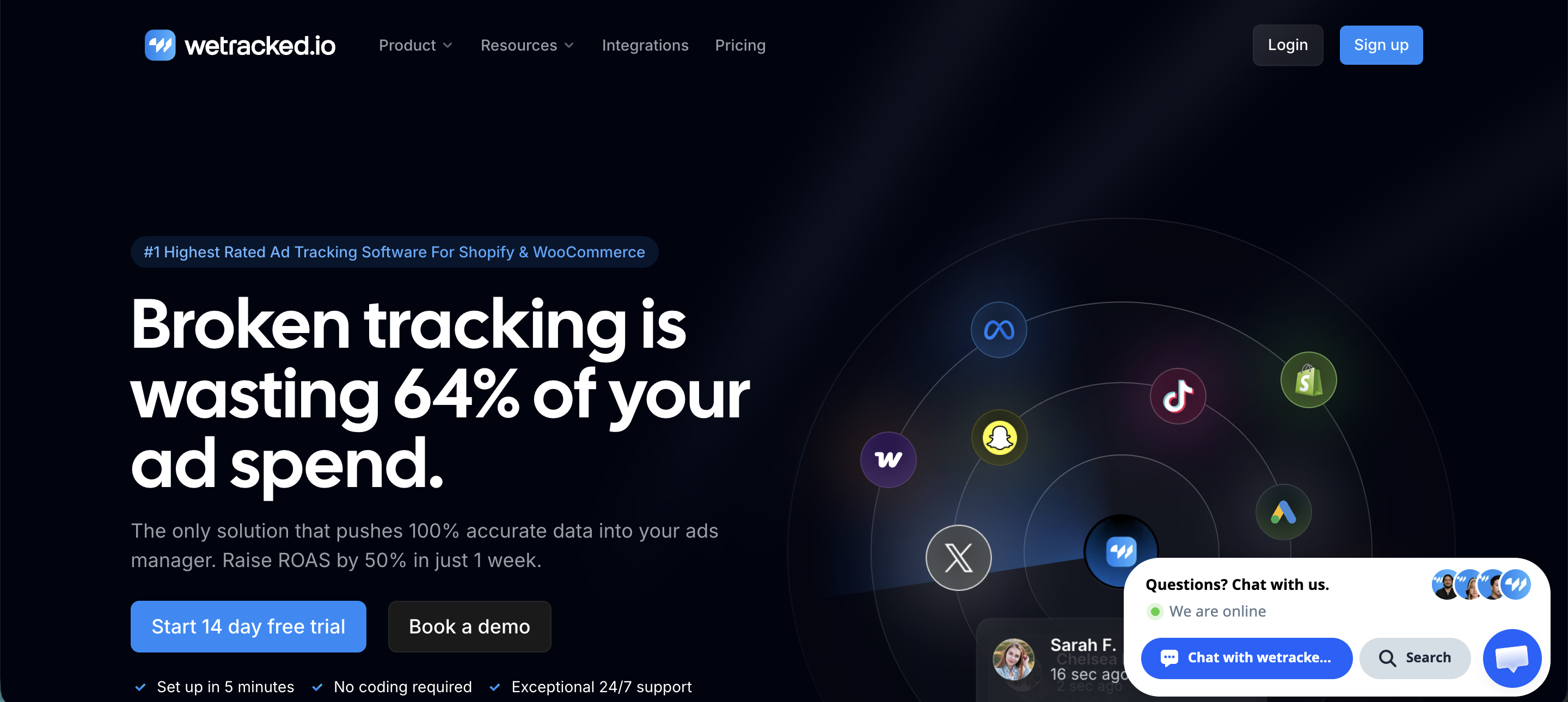
If your main problem is ad tracking, wetracked.io is the cleaner option. It focuses on one job: showing which ads, campaigns, and channels drive purchases, then sending that conversion data back to platforms like Meta, TikTok, and Google Ads.
That matters when your ad accounts are making budget decisions based on incomplete data. If Meta or Google cannot see enough real purchase events, campaign performance gets harder to judge. wetracked.io helps close that gap by tracking the path from ad click to sale and feeding cleaner data back into your advertising platforms.
The benefit is focus.
You do not need to build a large reporting system just to understand whether your ads are working. You do not need a full ecommerce command center if your team already has store reporting covered. And you do not need an advanced attribution suite if your biggest issue is basic conversion accuracy.
Northbeam is better for deep attribution work.
Triple Whale is better for wider ecommerce reporting.
wetracked.io is better when you want more accurate ad tracking without adding another heavy analytics platform to your stack.
For ecommerce brands that care about ad performance, that can be a better starting point. You get clearer conversion tracking, cleaner ad platform feedback, and a more direct way to see which campaigns are actually creating sales.
Try wetracked.io today, completely free.
FAQs
Is Northbeam better than Triple Whale?
Northbeam is better if your main concern is deeper marketing attribution, media mix modeling, and paid media measurement. Triple Whale is better if you also want ecommerce reporting, store metrics, and daily business visibility in one place.
Is Triple Whale better than Northbeam?
Triple Whale is better for Shopify and DTC brands that want attribution, profit tracking, customer data, and reporting in one dashboard. Northbeam is stronger when the main job is attribution depth and channel measurement.
How much does Northbeam cost?
Northbeam does not publish fixed monthly prices on its pricing page. It lists Starter, Professional, and Enterprise plans, with plan fit based on monthly ad spend, data volume, and measurement needs.
How much does Triple Whale cost?
Triple Whale has a Free plan, plus paid plans that scale based on annual GMV and the package you choose. Its pricing page currently shows Foundation from $219 per month and Automate from $749 per month at the selected revenue tier.
Do Northbeam and Triple Whale work for Shopify?
Yes, both Northbeam and Triple Whale work with Shopify. Northbeam can connect Shopify order data and store tracking to its dashboard, while Triple Whale is built heavily around Shopify reporting and pixel tracking.
What is the best Northbeam alternative?
wetracked.io is a strong Northbeam alternative if you want more direct ad tracking without a heavier analytics setup. It is a better fit for ecommerce brands that mainly need accurate conversion tracking and clean data sent back to their ad platforms.
What is the best Triple Whale alternative?
wetracked.io is a strong Triple Whale alternative if you care more about ad tracking accuracy than running a full ecommerce reporting dashboard. It helps brands see which ads drive sales, then sends that data back to platforms like Meta, TikTok, and Google Ads.

.png)
%20(1).png)
.png)


