.png)
ClickMagick and Voluum solve the same basic problem: helping you figure out which clicks actually turn into conversions. But once you move past basic campaign tracking, the two platforms start to feel very different.
ClickMagick puts more emphasis on accessible attribution, customer journey tracking, and easier setup. Voluum gives experienced media buyers more control over traffic sources, campaign routing, reporting, and automation.
So which one deserves your budget? In this ClickMagick vs Voluum comparison, we look at tracking accuracy, reporting, integrations, pricing, and day to day usability to see where each platform wins and where you may be better off looking elsewhere.
TL;DR
Get the better alternative to ClickMagick and Voluum for ad tracking. Try wetracked.io for free today.
ClickMagick vs Voluum at a glance
ClickMagick and Voluum have both been around for more than a decade, and both are built for marketers who need a clearer view of where conversions are coming from. They cover many of the same areas, including conversion tracking, campaign attribution, tracking links, and paid traffic analysis. The main difference is the type of marketer each platform tends to attract.
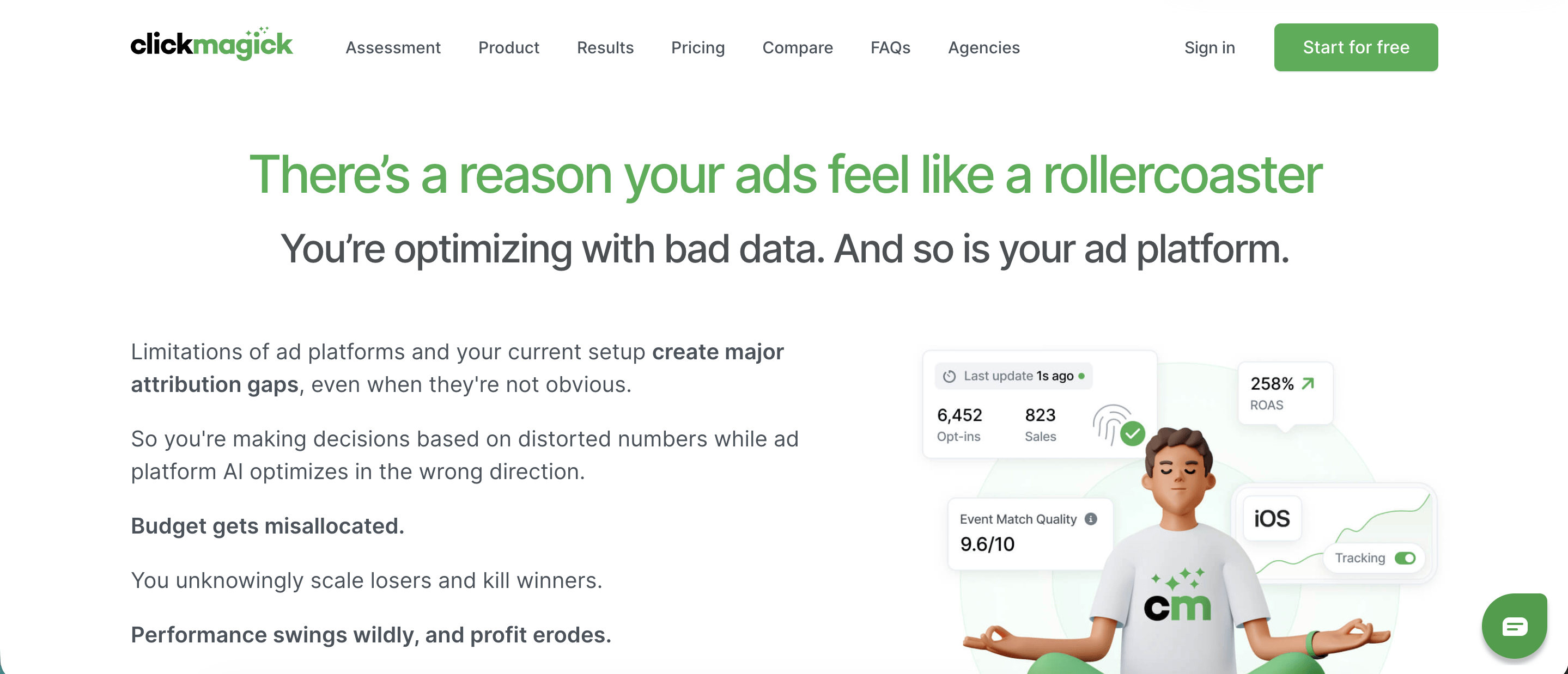
ClickMagick launched in 2014, originally with a strong focus on tracking links and affiliate campaigns. The platform has since expanded into broader ad attribution, with tools for tracking customer journeys, offline conversions, and conversions across different devices.
Link tracking software is still a big part of the product. You can track individual links, funnels, and affiliate offers, while ClickMagick TrueTracking is designed for businesses running paid campaigns through channels such as Google and Meta. Conversion data can also be sent back to those ad platforms to improve campaign reporting.
Voluum came slightly earlier, launching in 2013. The platform was founded by Robert Gryn and built specifically for performance marketers and media buyers running paid acquisition campaigns. Voluum later became part of Team Internet, a publicly listed technology company.
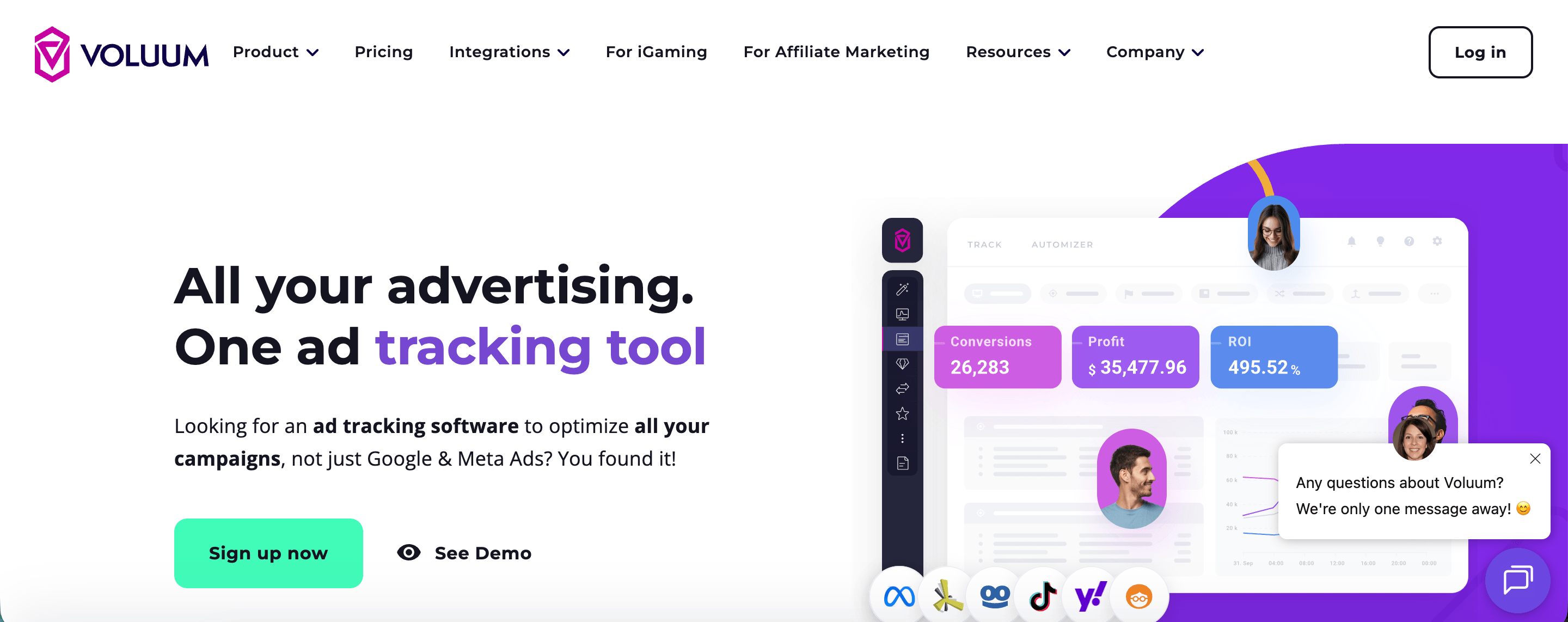
Voluum is commonly used by affiliate marketers, agencies, and media buying teams running campaigns across several traffic sources. Public customer stories include companies such as MediaGravy, Xevio, and TappX.
In practice, ClickMagick is generally easier to approach if you want accurate ad tracking without a highly technical campaign setup. Voluum makes more sense for experienced media buyers who need to manage larger campaign structures, several traffic sources, and high volumes of paid traffic.
ClickMagick vs Voluum: attribution accuracy
Both ClickMagick and Voluum get good feedback for tracking accuracy. ClickMagick tends to get more praise from advertisers who want cleaner conversion data than they are getting from Google Ads or Meta. Some reviewers specifically mention recovering conversions that ad platforms were missing.
ClickMagick also puts a lot of emphasis on bot filtering. The platform claims to filter around 99 percent of fake and automated clicks, while reviews mention cleaner, real-time reporting once suspicious traffic is removed.
You can also use a custom tracking domain, which can help reduce tracking losses caused by browser restrictions and ad blockers. This is useful when you are sending paid traffic to landing pages and want a more dependable picture of what happens after the click.
Voluum has a strong reputation for accurate affiliate tracking. You can track conversions using pixels or postbacks, while custom tracking options give experienced media buyers plenty of control over how campaigns are measured.
Google Ads requires a slightly different setup with Voluum. Google does not allow the redirects commonly used for affiliate campaigns, so Voluum uses direct tracking instead. A tracking script sits on the landing page and records visits without redirecting the user.
There are some limits to this setup. Certain Voluum routing features are unavailable with direct tracking, including normal landing page rotation. ClickMagick is easier to work with for straightforward paid ad attribution, while Voluum gives affiliate marketers more control over complex campaign tracking.
Data sources and tracking setup
ClickMagick is fairly flexible about where traffic comes from. You can track paid ads, email, social traffic, affiliate links, and organic visits, then follow visitors through the entire sales funnel. The Funnel Steps report can break this down by traffic source, campaign, individual ad, or keyword.
Setup is fairly straightforward if you control the website. Add the ClickMagick tracking code, connect the ad platforms you use, and configure the conversion events you care about. You can also create tracking links when you need to measure traffic without installing code on the destination page.
ClickMagick also gives you traffic quality analysis alongside regular campaign reporting. Bad clicks and automated traffic are filtered from reports, while ClickShield can flag suspicious activity coming from specific sources or campaigns.
Voluum takes a more campaign-focused approach. You normally create the traffic source, campaign, landing page, and offer inside Voluum, then choose between redirect tracking and direct tracking depending on how the campaign works.
That setup gives media buyers a lot of control. Voluum can capture parameters such as placement, device, country, campaign ID, and external click ID, which is useful when you are comparing traffic sources across a large number of ad campaigns.
Voluum is not limited to just affiliate marketing either. Organic traffic tracking is supported through a direct tracking script, and Voluum can keep paid and organic traffic in separate campaigns so the data does not get mixed together.
The tradeoff is setup. Adding a custom traffic source can mean mapping parameters and postbacks yourself, and more advanced funnels require more work inside Voluum. ClickMagick asks less of you if the goal is simply to connect traffic sources and see how visitors move from the first click through conversion.
Voluum offers more control over the mechanics of campaign tracking, while ClickMagick is easier to use when you want one view of the entire sales funnel.
Reporting and dashboard experience
ClickMagick keeps reporting fairly easy to digest. You can track clicks and conversions in real time, then see metrics such as conversion rate, ROAS, customer acquisition cost, and profit without building custom reports first.
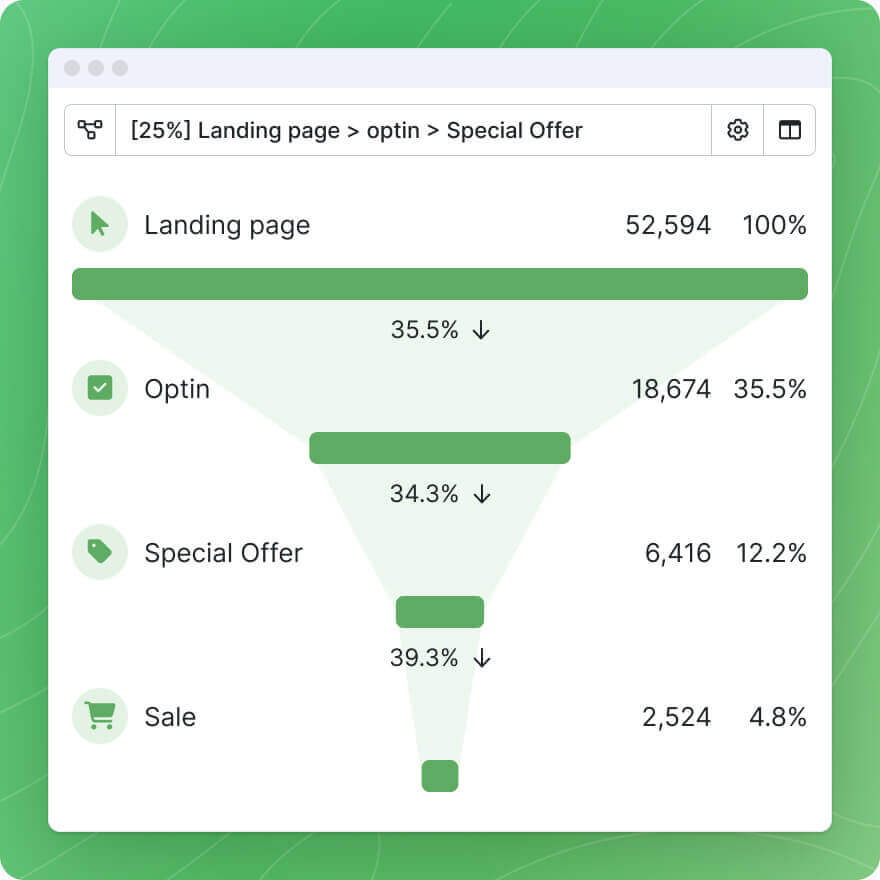
The reporting also goes beyond top level campaign numbers. You can see your best and worst performing ads, check how long customers take to convert, and compare traffic sources based on actual profitability.
Voluum offers more reporting depth for people who want to dig into campaign data. Reports can be grouped using the parameters passed from your traffic sources, including custom variables configured during setup.
Voluum also supports custom columns. You can create your own metrics using calculations between existing data points, which gives high volume media buyers more freedom when the standard reporting columns do not answer a specific question.
User reviews are generally positive about Voluum reporting. Some specifically praise how quickly they can drill into campaign data and find profitable segments, although getting full value from the advanced reporting requires a better understanding of how Voluum structures campaigns.
ClickMagick has the friendlier dashboard for straightforward performance analysis. Voluum gives experienced media buyers more control over how they inspect the data, especially when they are dealing with large campaign structures and lots of variables.
Marketing mix modelling and incrementality testing
Neither ClickMagick nor Voluum is a proper marketing mix modelling platform. You also do not get native incrementality experiments designed around control groups or geographic holdouts.
ClickMagick is more focused on attribution and split testing. You can compare landing pages or funnel variations, then use conversion data to see which version actually produces better results.
Voluum goes further on campaign optimization. Traffic Distribution AI can test landing pages, offers, or entire campaign paths, then automatically send more traffic toward the combinations producing better results.
There is more advanced automation here too. Voluum Automizer can apply rules to campaigns, while traffic distribution can keep adjusting based on conversion rate, ROI, or earnings rather than leaving every decision to the media buyer.
Voluum also has stronger fraud detection tools. The Anti Fraud Kit looks for signs of invalid traffic such as unusually fast clicks, repeated activity, suspicious referrers, and unrecognized user agents.
For actual marketing mix modelling or incrementality testing, you would need another measurement platform alongside either tracker. Between these two, Voluum gives you more experimentation and automation inside individual campaigns, while ClickMagick keeps testing closer to straightforward attribution and funnel optimization.
This is one of the most common reasons why users look at Voluum and ClickMagick alternatives.
Creative analytics
Neither ClickMagick nor Voluum is a dedicated creative analytics tool in the same sense as platforms built specifically for analyzing ad concepts, hooks, or visual elements. Both are better at telling you which ads produce conversions than explaining why a particular creative works.
ClickMagick can break performance down to the individual ad level through UTM data. Reports can show which ads are producing sales, along with metrics such as conversion rate, ROAS, revenue, and customer acquisition cost. ClickMagick also highlights the best and worst performing ads in the UTM Performance Report.
ClickMagick Insights adds another layer on top of that data. It looks for changes in ad performance and flags campaigns or ads that may need attention. The analysis is based on ClickMagick tracking data rather than an evaluation of the creative itself.
Voluum gives media buyers more freedom to slice creative performance by campaign data. If the traffic source passes a creative ID, Voluum can capture that value and let you compare clicks, conversions, profit, and other metrics for each creative.
Some Voluum integrations go further. For example, the Taboola integration can pull creative status into Voluum and allows advertisers to pause or resume individual creatives. Voluum automation rules can also use creative-level data when deciding what traffic to keep running.
Voluum has the edge if you run lots of creatives across complex paid campaigns and want more granular control. ClickMagick is easier if the main question is simply which ads are turning clicks into customers.
Customer journey visibility
ClickMagick gives you a fairly detailed view of what happens between the first visit and the eventual conversion. You can see the customer journey for individual visitors and trace activity back to the original traffic source.
Cross-device tracking is one of ClickMagick’s stronger points. If someone clicks an ad on a phone and later buys on a laptop, ClickMagick can connect those visits and attribute conversions back to the original ad.
That becomes useful when you are trying to find wasted spend. Instead of judging ad campaigns only by the conversions reported inside Google or Meta, you can see which sources actually brought in customers, even when the purchase happened much later.
Voluum can also show the events tied to a specific click and the steps that led to a conversion. Reports offer real-time stats across visits and conversions, so media buyers can follow campaign performance without waiting for delayed reports.
The limitation is cross-device journeys. Voluum uses click IDs to connect visits and conversions, and a person who switches devices or browsers receives a new click ID. Voluum is very good at showing what happened within a tracked campaign journey, while ClickMagick gives you a better view when customers move between devices before buying.
Integrations
ClickMagick focuses on the platforms most marketers are already using for paid acquisition. Direct integrations are available for Google Ads, Facebook Ads, LinkedIn Ads, Microsoft Ads, TikTok Ads, X Ads, and ChatGPT Ads.
Those connections help ClickMagick pull campaign data into one place and send conversion data back to the advertising platform. This gives you independent conversion attribution while still feeding better data into the platforms running your campaigns.
Affiliate marketers get plenty of coverage too. ClickMagick supports server to server postback tracking with more than 100 affiliate networks, so conversions can be tracked even when you do not control the offer page.
Voluum has a broader setup for media buyers working across many traffic sources and affiliate networks. Automizer connects Voluum with supported advertising platforms through APIs, allowing cost data and campaign information to flow directly into Voluum.
Google Ads and Meta are supported, along with networks such as Taboola and Outbrain. Some integrations also let you manage campaigns from Voluum, including actions such as pausing campaigns or applying automated rules.
For most marketers running Google, Meta, or other major ad platforms, ClickMagick covers the connections they are likely to need. Voluum gives you more room when your campaigns involve a larger mix of traffic sources, affiliate networks, and campaign automation.
Ease of setup and use
ClickMagick is the easier platform to get running for most advertisers. Basic setup means adding the TrueTracking code to your website and making sure your campaign URLs contain the right UTM parameters. ClickMagick says someone familiar with tracking codes can usually handle this in around 20 to 30 minutes.
ClickMagick offers a Setup Wizard along with guides for popular ad platforms and website builders. Most key features are fairly easy to find once tracking is working, although tools such as Audience Optimization and ClickShield need some additional configuration.
Voluum has made the starting process easier with QuickStart. You can create a basic campaign from one screen, add the traffic source and destination, then choose how you want the campaign tracked.
Things get more demanding once you start using the advanced features. Custom traffic sources require you to configure the parameters Voluum should capture, while conversion tracking can involve pixels or server postbacks depending on the campaign.
That complexity shows up in reviews as well. Several Voluum users mention a steep learning curve when first setting up campaigns, particularly around tracking parameters and postbacks. At the same time, experienced users often say the platform becomes much easier once the basic structure clicks.
ClickMagick still takes some learning if you want to use everything the platform provides. But if ease of setup matters, ClickMagick asks less from a new user. Voluum gives experienced media buyers more control, but you have to learn how the pieces fit together first.
Pricing comparison
ClickMagick is the cheaper tracking tool at the entry level. ClickMagick has three pricing plans: Starter at $79 per month, Standard at $199 per month, and Pro at $349 per month.
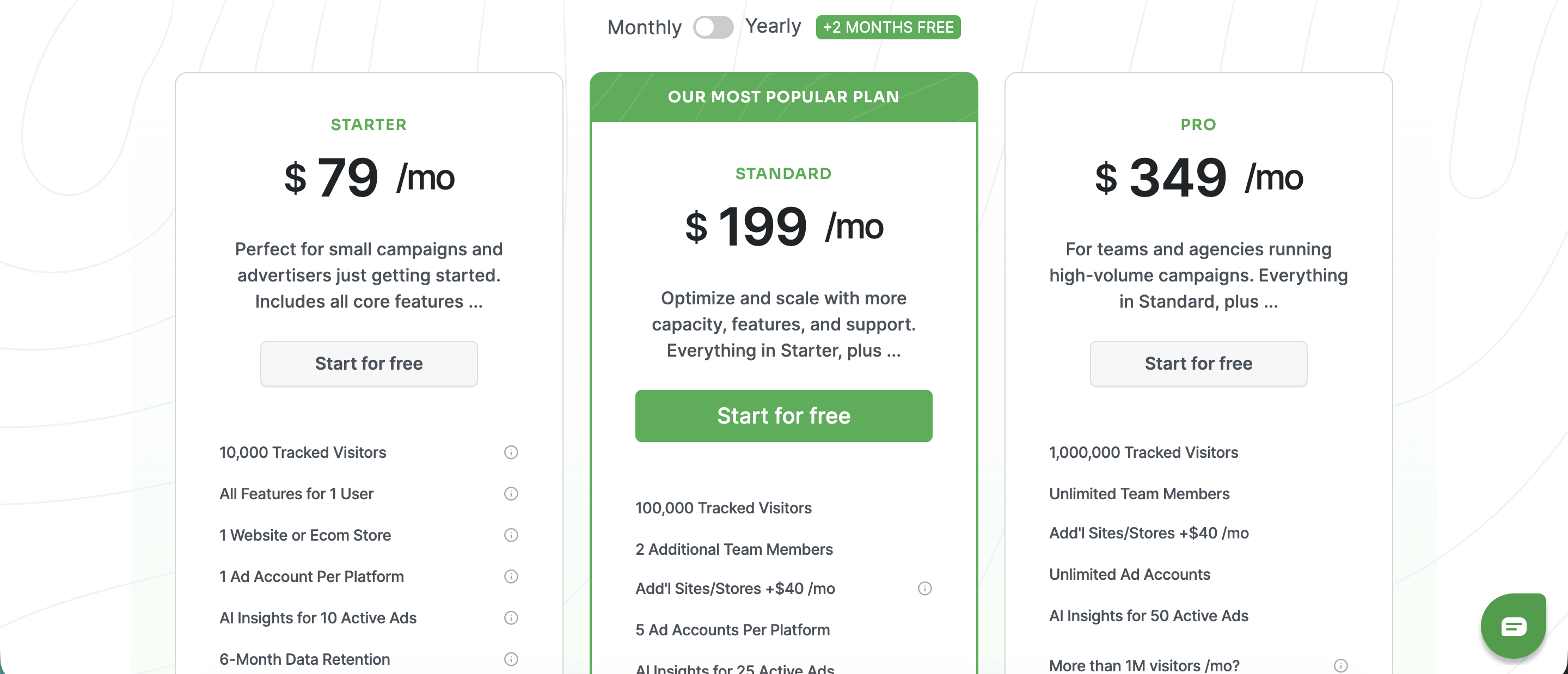
You can pay annually and bring those effective monthly prices down to $66, $166, and $291. The annual totals are $790 for Starter, $1,990 for Standard, and $3,490 for Pro.
Starter includes most core features and covers up to 10,000 tracked visitors per month. Standard raises that to 100,000 and adds advanced attribution, stronger bot protection, phone and offline sales tracking, and unlimited affiliate campaigns.
Pro supports up to 1 million tracked visitors, unlimited team members, and unlimited ad accounts. The structure makes costs fairly easy to understand because the main limit is monthly visitor volume.
Voluum pricing starts higher. If you pay annually, Profit costs $119 per month, Scale costs $299, and Start up costs $539. Higher business tiers include Agency at $799, Enterprise at $1,599, Corporate at $3,999, and Executive at $7,999 per month.
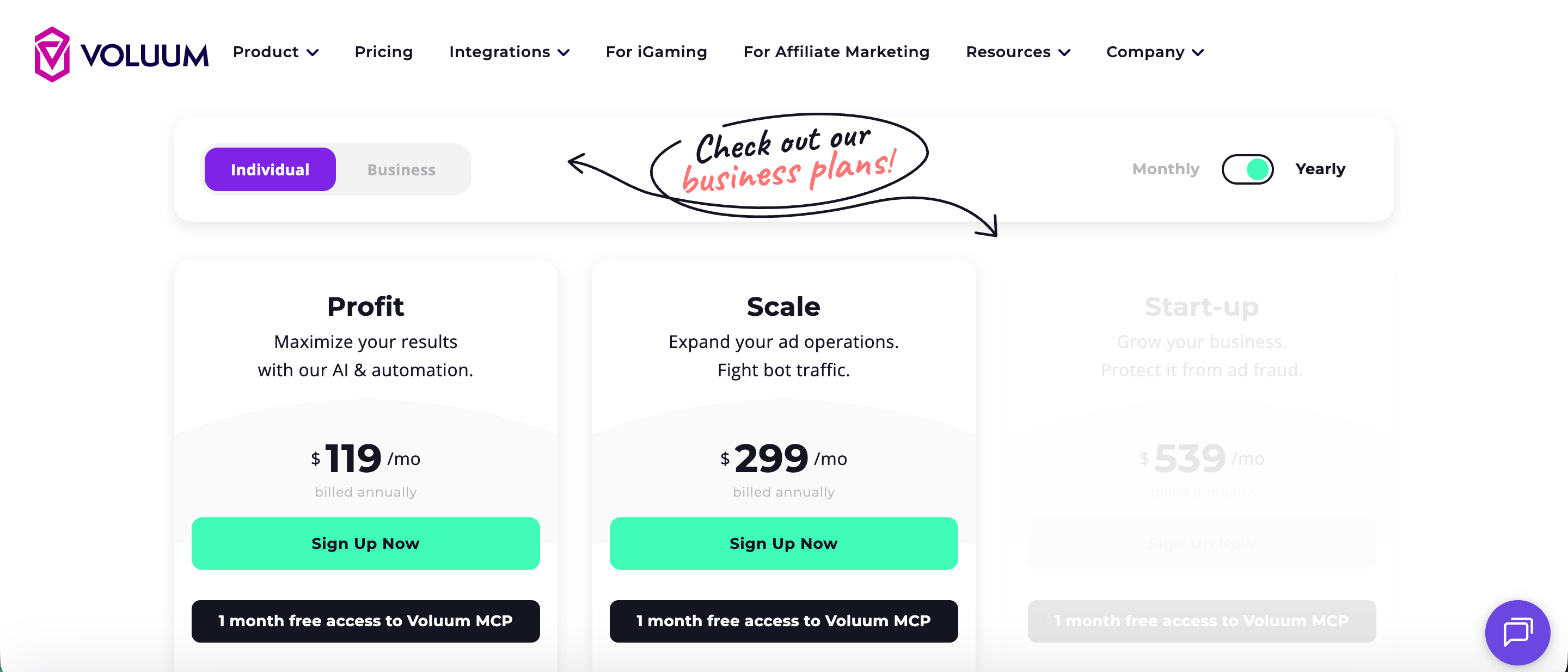
The Profit plan includes 1 million events per month, 20 active campaigns, and six months of data retention. Scale increases that to 5 million events and 60 active campaigns, while Start up includes 10 million events and 100 active campaigns.
Voluum also charges for events above the allowance. Profit charges $0.06 per additional 1,000 events, while the rate drops on higher plans. Automizer can introduce additional charges as well once you go beyond the ad spend included with your plan.
ClickMagick gives smaller advertisers more predictable costs and a much lower starting price. Voluum becomes easier to justify when you are running enough campaigns and traffic volume to make use of the much higher event limits and campaign management features.
Voluum vs ClickMagick: which one should you get?
Both platforms can handle serious campaign tracking, but they are built for different needs. Voluum makes more sense when campaign complexity is the main challenge. ClickMagick is easier to justify when you want accurate attribution without adding too much complexity to your setup.
Get Voluum if...
- You manage high traffic volumes across several paid traffic sources and affiliate networks.
- You need advanced campaign routing, traffic distribution, custom variables, and detailed reporting.
- Affiliate marketing is a major part of your acquisition strategy, with several offers and landing pages to manage.
- You want automation rules that can react to campaign performance.
- You have experienced media buyers who are comfortable with a more technical setup.
Get ClickMagick if...
- You mainly want accurate conversion attribution across Google, Meta, and other major advertising platforms.
- You want to follow the customer journey, including conversions that happen across different devices.
- You have a lean team and do not want campaign tracking to become another technical project.
- You care about filtering suspicious clicks and getting a cleaner view of which ads are producing customers.
- You want a lower starting price and costs that are easier to predict as traffic grows.
For most small and medium sized advertising teams, ClickMagick is the easier choice. Voluum makes more sense when you run enough campaigns and affiliate offers to benefit from the extra control.
Get wetracked.io instead
ClickMagick and Voluum are both capable tracking platforms. But if you run a Shopify or WooCommerce store and most of your budget goes into paid social or Google Ads, wetracked.io is worth looking at before committing to either one.
The biggest difference is focus. WeTracked is built specifically around ecommerce conversion tracking and sending better conversion data back into the ad platforms you already use.
Some practical reasons to consider wetracked.io include:
- Much easier setup: You can connect a Shopify or WooCommerce store without coding, then connect supported ad channels directly. You do not have to build out the type of campaign structure Voluum often requires.
- First party tracking and data enrichment: WeTracked collects customer activity and enriches conversion data before sending events back to your ad platforms. This helps recover data that can otherwise be lost because of browser restrictions or ad blockers.
- Conversion data goes back into your ad accounts: WeTracked sends tracked events directly to platforms such as Meta, Google Ads, TikTok, Pinterest, Snapchat, and X. You can still use the reporting inside those platforms instead of relying entirely on another dashboard.
- Built around ecommerce purchases: Pricing is based mainly on monthly order volume and the number of stores. Ad spend and revenue are unlimited across the standard plans, which can make pricing easier to predict as advertising budgets grow.
- Multiple pixels are supported: Every plan includes unlimited ad pixels per store, which is useful for brands working with several ad accounts or agencies.
There are cases where ClickMagick or Voluum still make more sense. Voluum has deeper tools for affiliate media buying, campaign routing, and traffic distribution. ClickMagick covers a wider range of tracking use cases outside ecommerce.
But if your main problem is inaccurate ecommerce attribution across paid ad channels, WeTracked has a much more focused product for that job. You get first party tracking, server side event forwarding, and ecommerce focused setup without having to build a complicated tracking system around your campaigns.
Try wetracked.io free for 14 days and see how the conversion data compares with what your ad platforms are reporting today.


.png)
.png)


