.png)
How much data for your online store brings you actionable insights, and how you differentiate it from pure noise? While built-in analytics tools in WooCommerce or Shopify can cover the basics well, sometimes you just need more. More detailed customer data, key metrics across the customer journey, better customer behavior analysis... And this is where ecommerce analytics tools come into play.
These platforms let you improve your average order value, understand customer behavior, and save your bottom line. Today, we show you the very best platforms that not only save you from manual reporting but actually make you money.
Find out where your ad spend is being wasted. Try WeTracked.io for free for 14 days.
TL;DR
- WeTracked.io – Best for ecommerce brands running paid ads that need accurate attribution and clean data sent back to ad platforms
- Google Analytics 4 – Best for free, baseline tracking of traffic, user behavior, and conversions
- Amplitude – Best for deep customer journey analysis and understanding retention and repeat purchase behavior
- Triple Whale – Best for Shopify brands focused on tracking ad performance and blended attribution in one dashboard
- Contentsquare – Best for analyzing on-site behavior with heatmaps, session replays, and UX insights
- Holistics BI – Best for teams that want advanced ecommerce reporting with full control over their data model
- Adobe Analytics – Best for large ecommerce teams that need highly customizable, enterprise-level analytics
- Jimdo – Best for small ecommerce businesses that want simple, built-in analytics within their ecommerce platform
- Matomo – Best for privacy-focused teams that want full data ownership and a Google Analytics alternative
- Mitzu.io – Best for tracking growth metrics like customer acquisition cost and customer lifetime value without heavy setup
- Mixpanel – Best for product and behavioral analytics to understand how customers interact and forecast behavior
Top features to look for in ecommerce analytics software
When you’re choosing an ecommerce analytics tool in 2026, the goal is simple.
You want fast, reliable answers about what’s making you money and what’s quietly killing conversions.
Start with revenue attribution that actually makes sense. You should be able to tie every sale back to a marketing campaign, channel, or touchpoint without digging through five different dashboards. If you can’t clearly see where your revenue comes from, you’re guessing.
Then there’s customer journey tracking. People don’t buy in one session anymore. They browse on mobile, come back on desktop, click an ad, open an email, and then finally convert. Your tool needs to connect those dots. Otherwise, you’re only seeing fragments of the story.
Real-time reporting is another big one. If you’re running paid campaigns or limited offers, delayed data slows you down. You want to catch issues or spikes as they happen, not hours later when the opportunity is gone.
You should also look for cohort and retention insights. Knowing who buys once is useful; knowing who comes back and spends more is where the real value is. Good tools help you spot patterns across customer groups so you can focus on long-term growth.
Flexible event tracking matters more than most people expect. You’ll want to track actions like product views, add to cart, checkout steps, or custom events without needing constant dev work.
Finally, privacy-resilient tracking is quickly becoming standard. With cookie restrictions and stricter regulations, tools that rely on first-party data will hold up better and give you cleaner data over time.
Top ecommerce analytics platforms for your online store in 2026
Whether you need a better way to organize your key performance indicators, get more accurate profitability analytics or get a complete understanding of your store's performance, we have the tool for you.
1. Wetracked.io
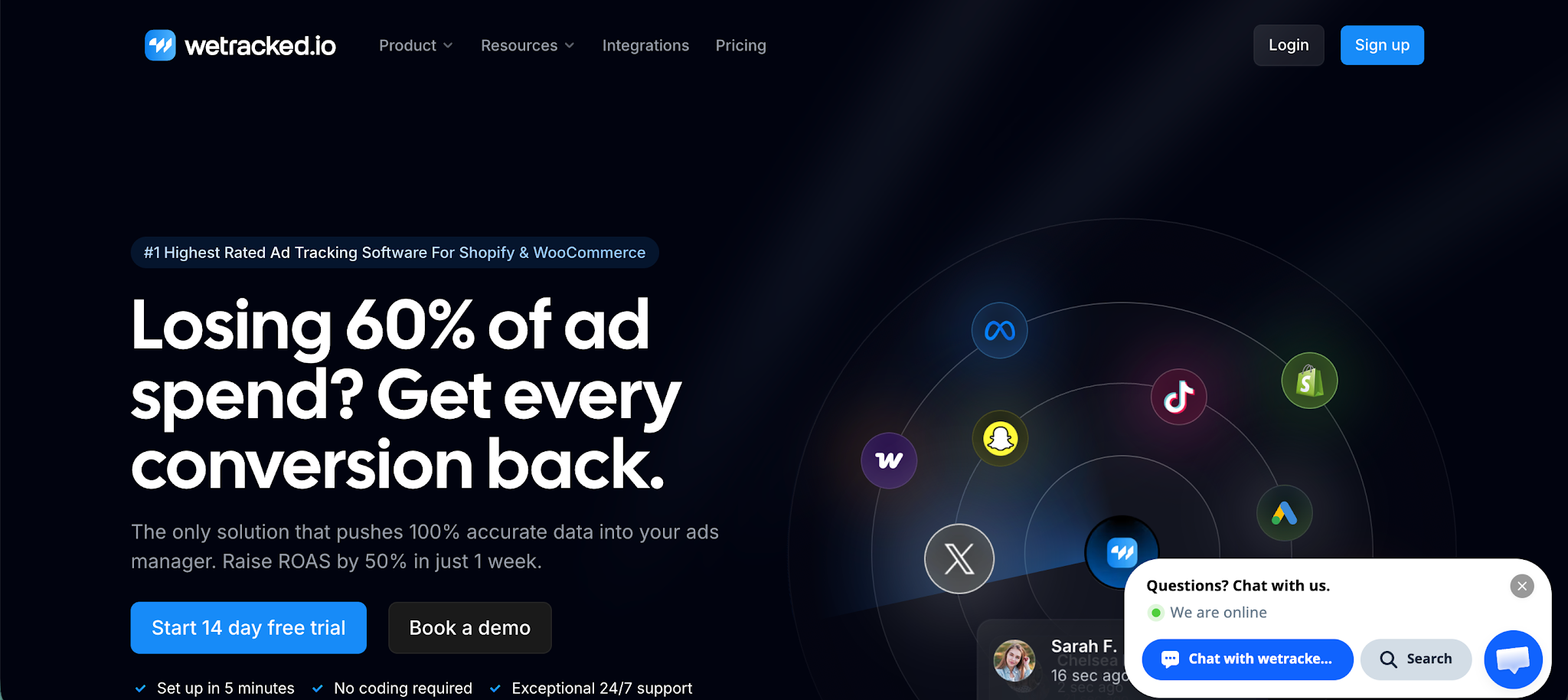
WeTracked.io is built specifically for ecommerce brands that rely on paid acquisition and want one thing above all else: accurate data they can actually trust. Instead of just visualizing what happened, it focuses on fixing attribution at the source, so your ad platforms get clean, reliable conversion data and optimize correctly.
Key features:
- 100% accurate ad attribution: Tracks every sale back to its original ad click and pushes that data directly into your ad platforms, helping you scale what works and cut what doesn’t
- First-party tracking engine: Uses first-party data to bypass ad blockers and iOS restrictions, so your reporting doesn’t fall apart as privacy rules tighten
- Automated event tracking: Captures key ecommerce events like pageviews, add to cart, purchases, and revenue automatically, with no manual setup
- Ad platform data sync: Sends clean conversion data directly into Meta, Google Ads, TikTok, and other channels to improve campaign optimization in real time
- 360° data enrichment engine: Rebuilds missing or blocked data points to give a more complete picture of performance across channels
- Adblock-proof tracking: Maintains tracking accuracy even when users block scripts or cookies, which is a major gap in most analytics tools
- Single dashboard for all channels: Combines performance data into one table, so you can quickly see which campaigns are profitable across platforms
- No code setup: Connect Shopify or WooCommerce and ad accounts in minutes without developer involvement
- Real-time data forwarding: Sends conversion data instantly to ad platforms so algorithms can optimize faster
- Multichannel integrations: Works with major ecommerce and ad platforms like Meta, Google, TikTok, and more out of the box
WeTracked.io is easily one of the strongest options if your growth depends on paid ads, but it’s not trying to replace every analytics tool. It’s heavily focused on attribution and ad performance, so if you need deep on-site behavior analysis or product analytics, you’ll likely pair it with something like GA4 or Amplitude. For stores not running ads at scale, it can feel like overkill, since its biggest strength is fixing the exact problem most ecommerce teams struggle with, broken tracking.
Try WeTracked.io today, completely free.
2. Google Analytics 4
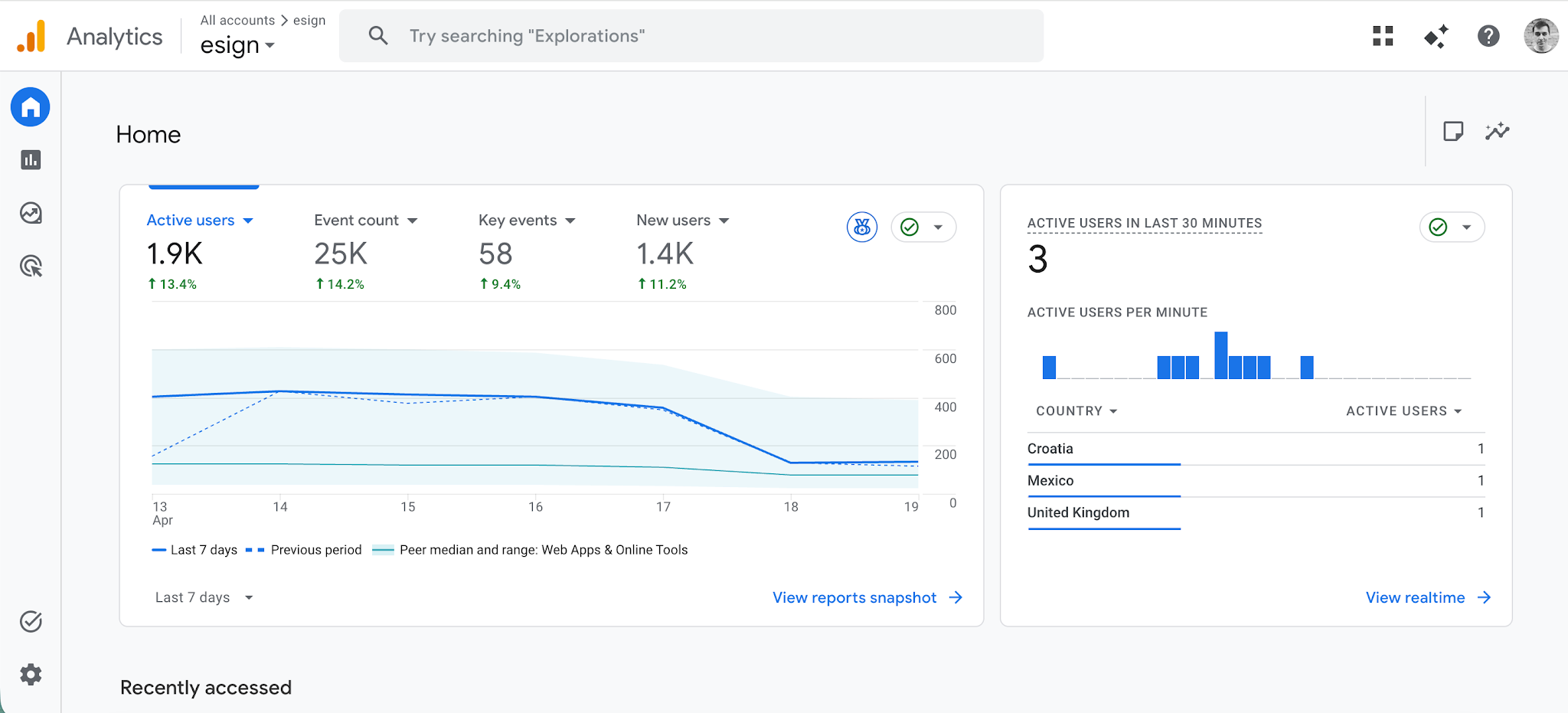
Google Analytics 4 is the default starting point for most ecommerce teams, mainly because it’s free and tightly connected to the rest of the Google ecosystem. It gives you a solid baseline view of traffic, user behavior, and conversions (e.g., from Google Ads), though getting real value out of it takes some setup and patience.
Key features:
- Event-based tracking: Tracks every interaction as an event, from product views to purchases, giving a more flexible view of user behavior
- Ecommerce tracking: Measures purchases, revenue, product performance, and shopping behavior across your store
- Cross-device and cross-platform tracking: Connects user journeys across mobile, desktop, and apps into one view
- Custom funnels and reports: Build your own funnels, cohorts, and path analysis to understand drop-offs and conversions
- BigQuery integration: Export raw data for deeper analysis and modeling without sampling limits
GA4 is powerful, but it’s not exactly friendly. The learning curve is real, especially with the shift to an event-based model. Attribution can feel limited, and you’ll often need additional tools to get a clear link between marketing spend and revenue. On top of that, data sampling and privacy restrictions can leave gaps in your reporting, which makes it harder to trust the numbers at scale.
3. Amplitude
Amplitude is a product-focused customer journey analytics platform that’s widely used by ecommerce and SaaS teams to understand how users behave across their site or app. It leans heavily into behavioral data, which makes it especially useful if you care about retention, repeat purchases, and long term customer value, not just one-off conversions.
Top features:
- Customer journey analysis: Visualizes how users move through your store, from first visit to purchase and beyond, helping you spot drop-offs and friction points
- Behavioral cohorts: Groups users based on actions like repeat purchases, cart abandonment, or product views, so you can analyze high-value segments
- Funnel analysis: Tracks conversion steps in detail, showing exactly where users leave and what impacts completion rates
- Predictive analytics: Uses historical behavior to forecast actions like churn or likelihood to purchase again
- Event-based tracking: Lets you define and track custom events across your product without being locked into rigid pageview models
Amplitude is powerful, but it’s not built specifically for ecommerce out of the box. Setting up events and making sense of the data takes time, and non-technical teams can struggle early on. It also doesn’t handle marketing attribution as well as dedicated ecommerce tools, so you may need something else to connect ad spend with revenue.
4. Triple Whale
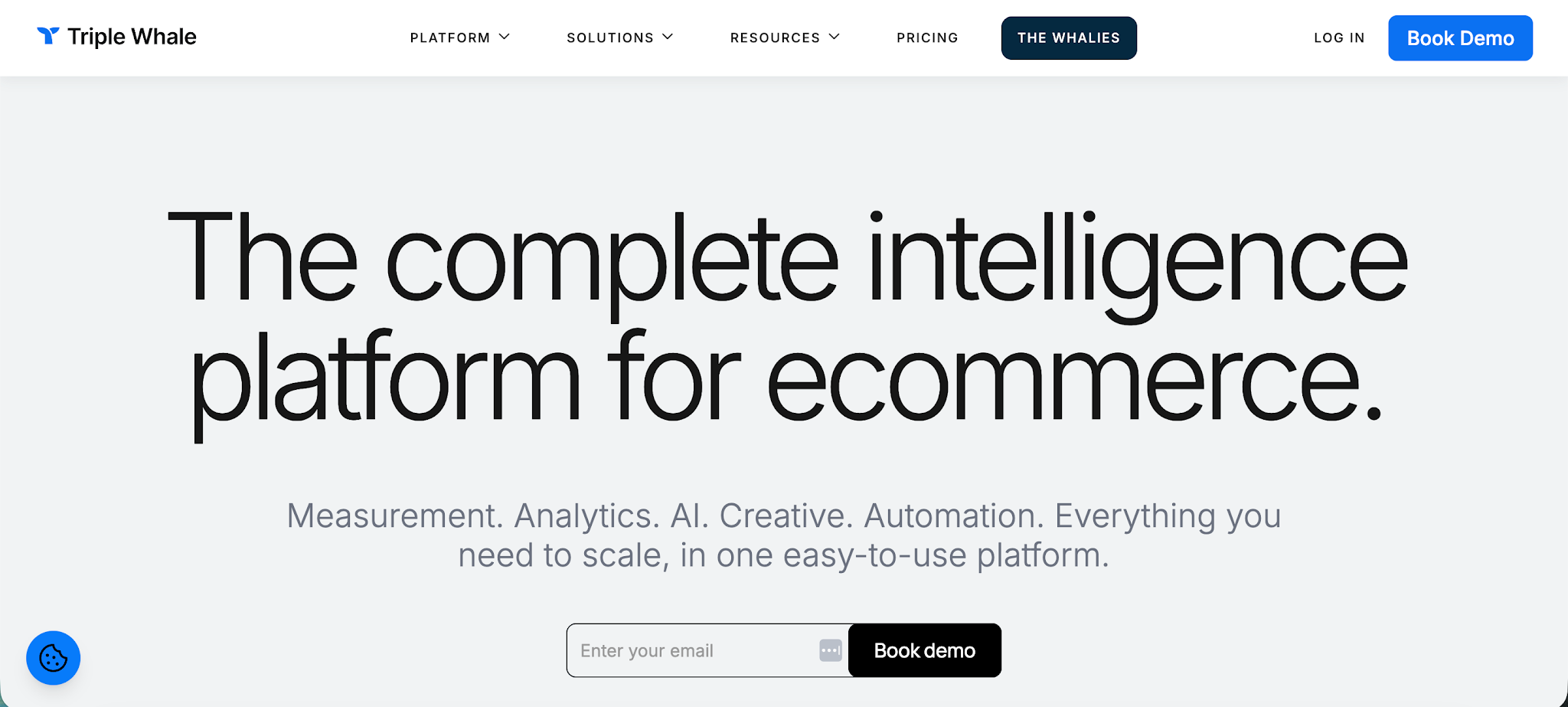
Triple Whale is built specifically for ecommerce brands, especially those running on Shopify and spending heavily on paid ads. It focuses on giving you a clear, real-time view of performance across channels, with a strong emphasis on tying ad spend directly to revenue.
Top features:
- Marketing attribution dashboard: Pulls data from ad platforms like Facebook and Google into one place, showing which campaigns actually drive revenue
- Blended attribution model: Combines multiple data sources to give a more realistic view of performance beyond last click attribution
- Real time reporting: Tracks sales, spend, and profit as they happen, which is useful during active campaigns or product launches
- Creative and ad performance insights: Breaks down which ads, creatives, and audiences are generating the best returns
- Shopify integration: Deep integration with Shopify stores, including metrics like profit, LTV, and MER
Triple Whale is great if you’re heavily focused on paid acquisition, but it’s less flexible outside that use case. It works best in a Shopify environment, so non-Shopify stores may not get the same value. Pricing can also climb quickly as your store grows, and it’s not as strong when it comes to deep product analytics or granular on-site behavior compared to tools like Amplitude.
5. ContentSquare

Contentsquare is a data analytics platform built for ecommerce businesses that want a deeper look at how users interact with their site. It goes beyond basic metrics and focuses on behavior, using advanced analytics to show what people actually do on your pages, not just where they click.
Top features:
- Session replay: Lets you watch real user sessions to understand how visitors navigate, scroll, and interact with your store
- Heatmaps and zone-based analysis: Shows where users click, hover, and engage most, helping you identify high and low performing areas
- Customer journey analysis: Maps out user paths across pages and sessions, highlighting friction points and drop-offs
- AI-driven insights: Surfaces patterns and anomalies automatically, so you can spot issues without digging through raw data
- Experience metrics: Tracks engagement, frustration signals, and page performance to connect UX with conversion outcomes
Contentsquare is powerful, but it’s definitely on the enterprise side. Pricing is high, which puts it out of reach for smaller stores, and setup can take time, especially if you want to get the most out of its advanced features. It’s also more focused on on site behavior than marketing attribution, so you’ll likely need another tool to fully understand where your traffic and revenue come from.
6. Holistics BI
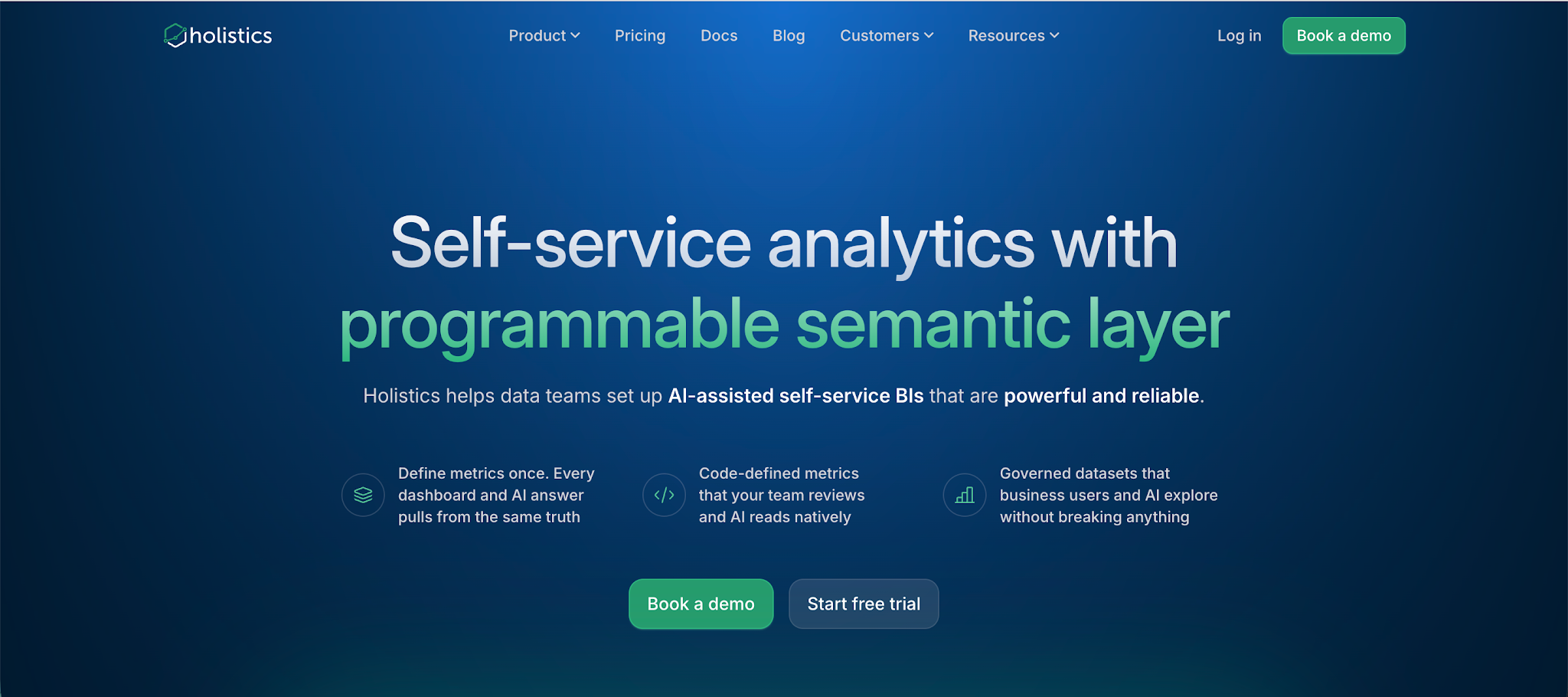
Holistics BI sits closer to the business intelligence side of ecommerce analytics platforms, which makes it a strong option if you want deeper ecommerce reporting and full control over your data. Instead of giving you prebuilt dashboards, it lets you model your data properly and build reports that reflect how your business actually works.
Top features:
- Self-service reporting: Lets non technical teams explore data and build reports without constantly relying on analysts
- Semantic data modeling layer: Centralizes metrics and definitions so everyone works from the same source of truth across reports and dashboards
- Advanced analytics and customization: Supports complex queries, custom metrics, and flexible dashboards tailored to your business needs
- User behavior data exploration: Allows teams to analyze large volumes of user behavior data across different dimensions and timeframes
- Automated reporting and scheduling: Sends reports via email or Slack on a schedule, so stakeholders always have up-to-date data
- Data warehouse integrations: Connects with tools like Snowflake, BigQuery, and Redshift for scalable data analysis
- Canvas-based dashboards: Build highly customizable dashboards that combine charts, text, and context into a more narrative style report
- AI-assisted querying: Lets users ask questions in plain language and get answers grounded in defined metrics, reducing reliance on SQL
Holistics is powerful, but it’s not plug and play. You’ll need a proper data setup, usually with a data warehouse, and someone who understands modeling to get the most out of it. It’s also not built specifically for ecommerce out of the box, so things like attribution and profit tracking need to be configured manually or handled with other tools.
7. Adobe Analytics
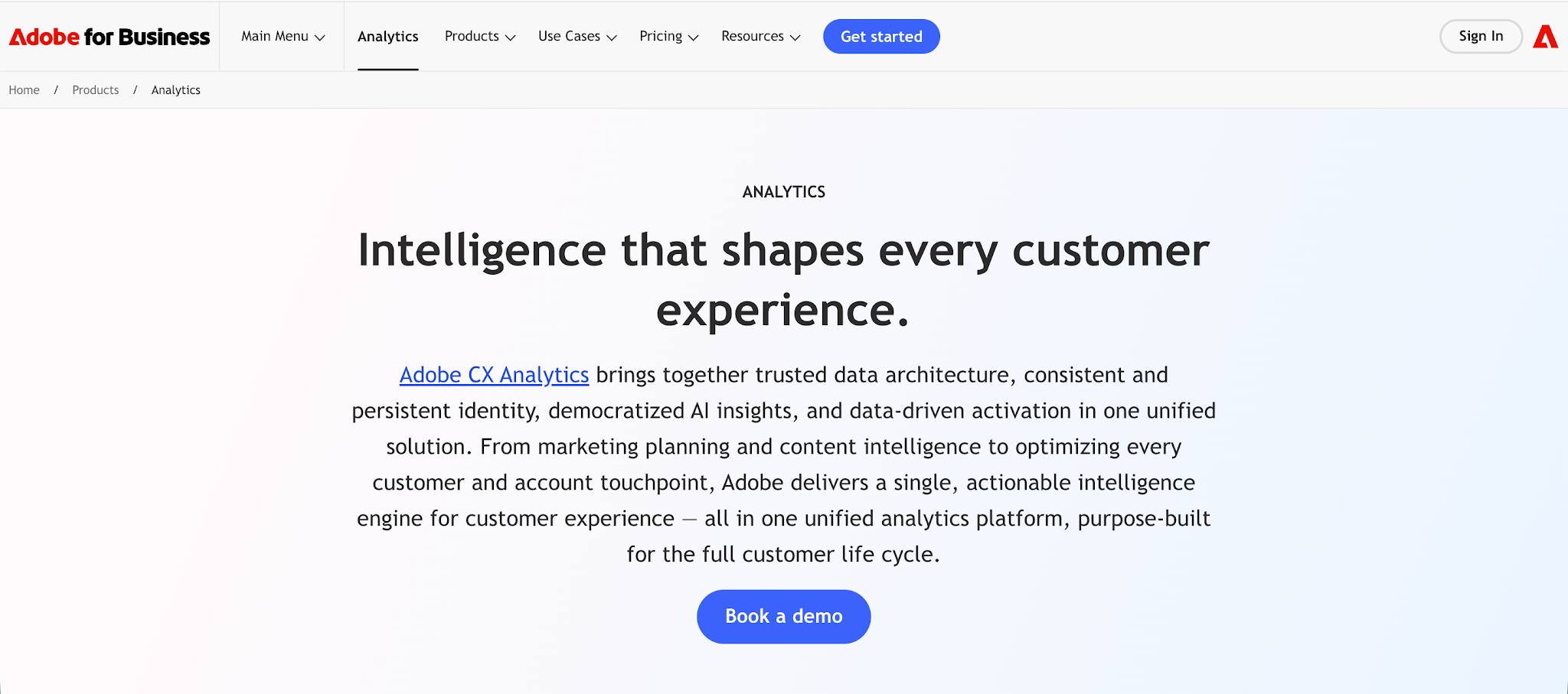
Adobe Analytics is an enterprise-level analytics platform built for large ecommerce and digital teams that need deep, customizable reporting across every touchpoint. It’s part of the Adobe Experience Cloud, which means it can connect data from websites, apps, campaigns, and more into a single view of the customer journey.
Top features:
- Advanced customer journey analysis: Tracks and connects user interactions across channels, giving a full picture of how people move from first touch to purchase
- Powerful segmentation: Lets you break down users into highly specific groups based on behavior, timing, or attributes for deeper analysis
- Customizable reporting and dashboards: Build detailed reports tailored to your business, instead of relying on prebuilt templates
- Marketing attribution models: Measures performance across channels and campaigns to understand what actually drives conversions
- Predictive analytics and anomaly detection: Uses statistical models to forecast trends and flag unusual changes in performance
- Real-time data analysis: Helps teams react quickly to changes in user behavior and campaign performance
- Integration with Adobe ecosystem: Connects with tools like Adobe Commerce and Experience Platform for deeper personalization and reporting
Adobe Analytics is extremely powerful, but it comes with a cost. It’s expensive, complex to implement, and usually requires dedicated analysts or engineers to manage it properly. For most ecommerce brands, especially smaller or mid-sized ones, it’s overkill. You’ll spend a lot of time setting it up before you get usable insights, and even then, turning those insights into action can feel slower than with more focused tools.
8. Jimdo

Jimdo is primarily an ecommerce platform with built-in analytics features, making it a simple ecommerce analytics tool for small ecommerce businesses that want everything in one place. It’s best suited for beginners who need basic insights without dealing with complex setups or multiple tools.
Top features:
- Built-in analytics dashboard: Gives a quick overview of traffic, orders, and revenue directly inside the platform
- Sales and order tracking: Tracks purchases, order value, and product performance without needing external integrations
- Customer insights: Provides basic data on returning customers and buying patterns, helping you keep an eye on customer loyalty
- Simple traffic analytics: Shows where visitors come from, including search engines and direct traffic
- Mobile-friendly reporting: Lets you check store performance and stats on the go
- All-in-one setup: Combines website builder, store management, and analytics into a single tool, which keeps things simple for new users
Jimdo works well if you want something easy, but it’s limited once your store grows. The analytics are quite basic compared to dedicated tools, so you won’t get deep insights into user behavior, attribution, or advanced reporting. For scaling ecommerce brands, it quickly becomes something you outgrow rather than rely on long-term.
9. Matomo
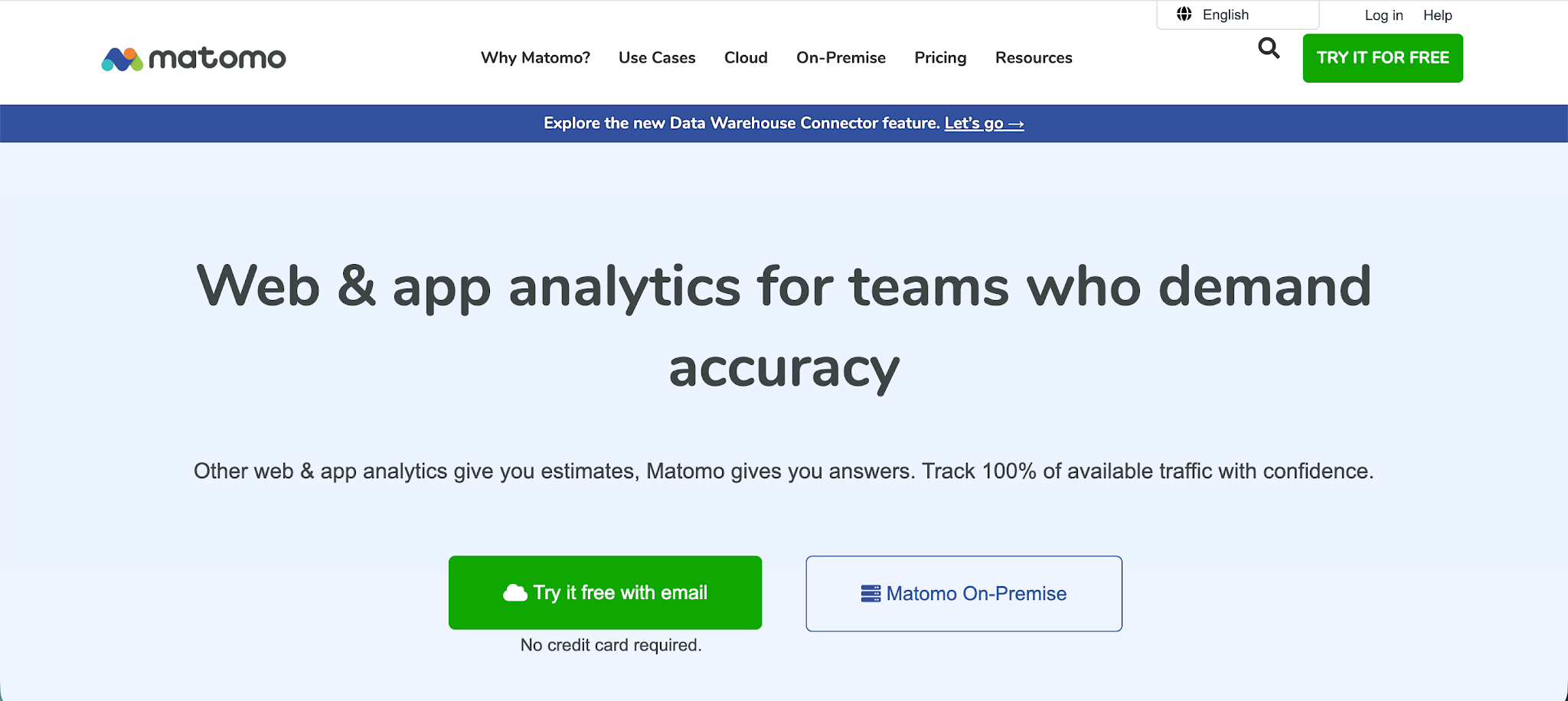
Matomo is a privacy-focused analytics platform that gives you full control over your data, which makes it a popular choice for ecommerce teams that don’t want to rely on Google. It works well for tracking performance across your ecommerce store while still delivering solid behavioral insights and keeping everything in one place.
Top features:
- Full data ownership: Stores all your data on your own servers or private cloud, giving you complete control and compliance flexibility
- Ecommerce tracking: Measures orders, revenue, conversion rates, and product performance across your store
- User behavior tracking: Captures clicks, pageviews, and sessions to generate deeper behavioral insights into how visitors interact with your site
- Unified data view: Combines traffic, conversions, and user behavior data into a single dashboard for easier analysis
- Custom reports and dashboards: Build reports tailored to your marketing efforts and business goals
- Heatmaps and session recordings: Visual tools that help you understand how users navigate and where they drop off
- Goal and funnel tracking: Tracks key conversion paths and highlights friction points affecting customer retention
- Privacy-friendly tracking: Works without relying heavily on third-party cookies, helping maintain more consistent data
Matomo is a strong alternative to GA4, but it requires more hands-on setup and maintenance, especially if you self-host it. The interface can feel less polished, and while it delivers meaningful insights, it doesn’t go as deep into attribution or predictive analytics as some newer tools. For teams without technical support, getting everything configured properly can take time.
10. Mitzu.io
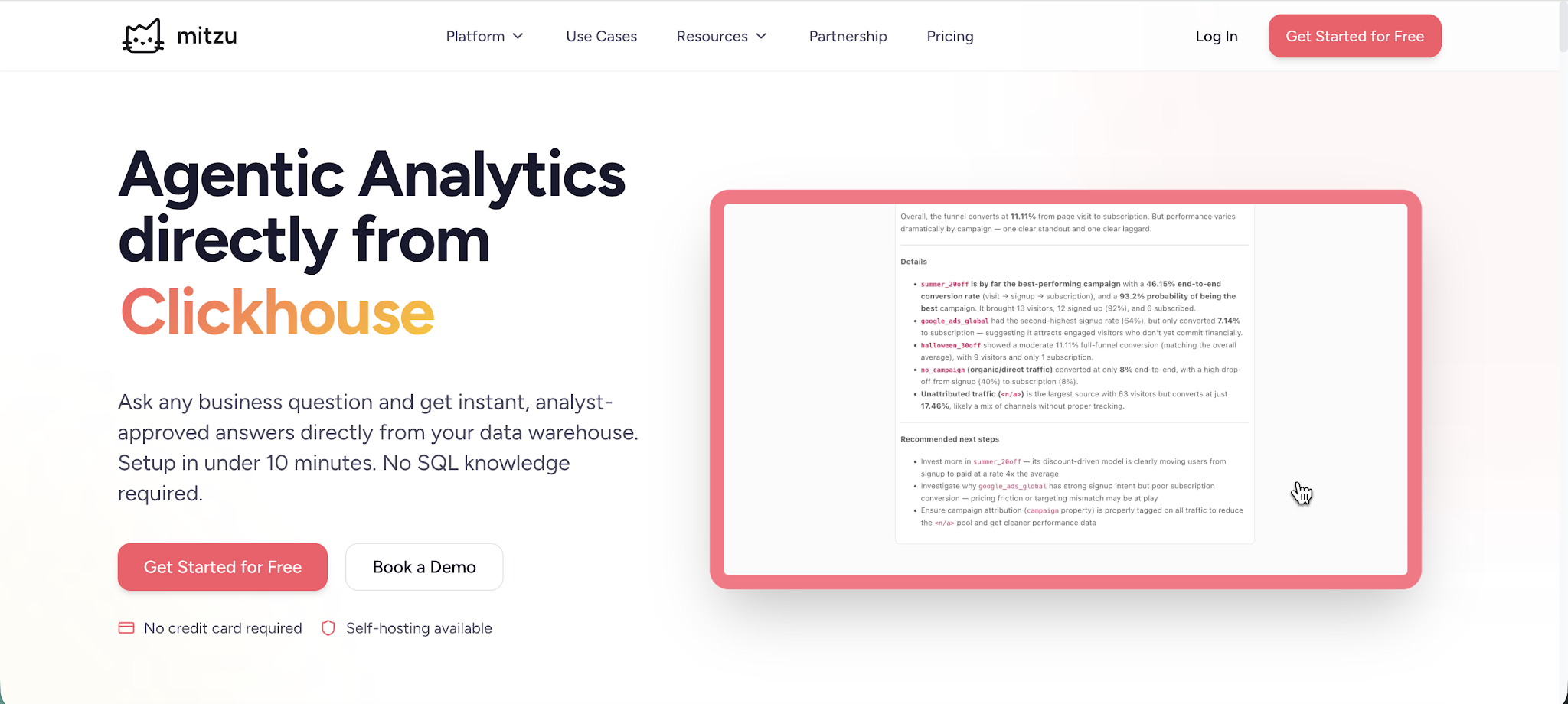
Mitzu.io is a product and analytics tool focused on helping teams understand growth, retention, and monetization without the usual data complexity. It’s a good fit for ecommerce teams that want quick answers around marketing performance, customer acquisition cost, and long-term value without relying on a full data team.
Top features:
- Prebuilt growth metrics: Tracks key ecommerce metrics like customer acquisition cost, conversion rates, and customer lifetime value out of the box
- Funnel and journey analysis: Shows how users move from first visit to purchase, helping you identify drop-off points
- Cohort analysis: Breaks down users based on when and how they were acquired, so you can track retention and repeat purchases
- Unified data layer: Pulls data from different marketing platforms into one place, giving you a clearer picture of performance
- SQL-powered analysis: Lets more technical users run deeper queries while still keeping the interface accessible for non-technical teams
- Fast time to insight: Designed to give answers quickly without long setup times or heavy data modeling
Mitzu.io is strong on product and growth analytics, but it’s not a full ecommerce analytics suite. You won’t get deep attribution or ad-level insights like you would with tools built specifically for paid media. It also relies on having clean data pipelines, so if your data setup is messy, you’ll feel that pretty quickly.
11. Mixpanel
Mixpanel is a product analytics tool that helps you understand how customers interact with your store, from first click to repeat purchase. It’s a strong addition to any modern ecommerce data stack, especially if your marketing teams want to go beyond surface-level metrics and make more data-driven decisions.
Top features:
- Event-based tracking: Captures every user action, so you can see exactly how customers interact with products, pages, and checkout flows
- Funnel analysis: Breaks down each step of the conversion process, helping you identify where users drop off and why
- Cohort analysis: Groups users based on behavior or acquisition source, making it easier to track retention and repeat purchases
- User journey mapping: Visualizes how users move across your store over time, not just in a single session
- Retention reports: Shows how often customers come back and what drives long-term engagement
- Predictive insights: Uses historical data to forecast customer behavior, such as likelihood to convert or churn
- A B testing integrations: Connects with experimentation tools so you can measure the impact of changes on user behavior
Mixpanel is great for deep behavioral analysis, but it’s not built for marketing attribution. You won’t get a clear view of ad spend versus revenue without additional tools. It can also feel overwhelming at first, since everything depends on how well your events are set up, and getting that right takes time.
Wrapping up
If you’ve made it this far, one thing should be clear. There’s no single “perfect” ecommerce analytics tool. Each one solves a different piece of the puzzle.
Some tools, like GA4 or Matomo, give you a solid baseline of traffic and behavior. Others, like Amplitude and Mixpanel, go deeper into how users actually move through your store. Then you have platforms like Contentsquare that focus heavily on on-site experience, or BI tools like Holistics that help you make sense of large datasets.
But here’s the real issue most ecommerce brands run into.
You don’t lose money because you lack dashboards. You lose money because your attribution is broken.
If your ad platforms are optimizing based on incomplete or inaccurate data, everything else falls apart. Campaigns that look profitable aren’t. Winning ads get killed too early. Budgets get pushed in the wrong direction.
That’s exactly where WeTracked.io stands out.
Instead of just reporting on what happened, it fixes the core problem by giving you clean, reliable conversion data and sending it straight back to your ad platforms. That means better optimization, better scaling, and far less guesswork.
If you’re serious about growing an ecommerce brand in 2026, this is the piece you can’t afford to get wrong.
Try WeTracked.io with a free trial and see what your data actually looks like when it’s accurate.