.png)
Facebook attribution used to feel a lot simpler.
You launched campaigns, watched conversions come in, and scaled whatever Ads Manager claimed was working. Then iOS updates happened. Browser tracking became unreliable. Customers started jumping between devices and channels constantly. Suddenly, every platform started reporting different numbers for the exact same campaign.
Now advertisers are stuck trying to answer questions that should not be this difficult.
Did Facebook actually drive that purchase? Was it Google retargeting? Did the customer convert because of an email flow three days later? Which campaign deserves more budget, and which one only looks profitable because of inflated attribution?
That confusion is exactly why Facebook attribution tools have exploded in popularity over the past few years.
Some focus heavily on ecommerce profitability. Others specialize in lead generation, offline conversions, multi-touch attribution, or server-side tracking. The goal is always the same, though, getting closer to the truth about where revenue is actually coming from.
In this guide, we break down the best Facebook attribution tools in 2026, including what each platform does best, where it struggles, and which type of advertiser it actually makes sense for.
TL;DR
- wetracked.io: best for ecommerce brands that want cleaner Facebook attribution and profitability reporting
- Ruler Analytics: best for B2B lead attribution tied directly to calls, pipeline, and revenue
- Cometly: best for multi touch Facebook attribution with strong revenue reporting dashboards
- Northbeam: best for large ecommerce brands analyzing revenue attribution across several channels
- Triple Whale: best for Shopify brands tracking Facebook profitability and subscription revenue
- Adbeacon: best for improving Facebook attribution accuracy with server side tracking
- Hyros: best for high spend advertisers needing enterprise level attribution analysis
- AdEspresso: best for smaller teams simplifying Facebook campaign testing and optimization
What is a Facebook attribution tool and why do you need one?
A Facebook attribution tool helps advertisers understand which Facebook and Instagram campaigns actually contribute to conversions, purchases, leads, and revenue.
That sounds simple in theory. In reality, Facebook attribution has become much harder over the past few years.
Privacy updates, browser restrictions, ad blockers, and cross-device behavior all make tracking less reliable than it used to be. At the same time, customers rarely buy after seeing just one ad. Someone might click a Facebook ad, come back later through Google, open an email two days later, and finally convert after seeing a retargeting campaign on Instagram.
Native Meta reporting does not always tell that full story clearly.
That is why many advertisers use dedicated Facebook attribution tools instead of relying entirely on Ads Manager. These platforms help marketers track customer journeys more accurately, compare attribution models, improve conversion tracking, and connect ad spend directly to revenue.
Some Facebook attribution tools focus mainly on ecommerce purchases and profitability reporting. Others specialize in B2B lead attribution, offline conversions, call tracking, or server-side event tracking. Some are lightweight reporting tools, while others are closer to enterprise attribution systems.
For smaller advertisers, Meta’s built-in reporting may still be enough. But once ad spend starts growing, attribution accuracy becomes a much bigger issue. Even small reporting gaps can lead to scaling the wrong campaigns, pausing profitable ads too early, or wasting budget on channels that only appear to perform well.
Top features to be on the lookout for
Not all Facebook attribution tools solve the same problem. Some focus mainly on ecommerce purchases, while others are built for lead generation, offline conversions, or enterprise reporting. Before choosing a platform, it helps to understand where your biggest attribution blind spots actually are.
One of the most important features is multi-touch attribution. Customers rarely convert after seeing a single Facebook ad, so good attribution software should track how campaigns assist conversions across the full customer journey instead of relying only on last click reporting.
Another major feature is server-side tracking. Privacy changes and browser restrictions have made attribution less reliable, which is why many modern platforms now use first party and server-side tracking methods to improve tracking accuracy.
You should also look for cross-channel reporting. Facebook campaigns do not exist in isolation. Strong attribution tools combine marketing data from Meta, Google, TikTok, Shopify, CRMs, and email platforms into one place so advertisers can understand how channels work together.
For larger businesses, support for offline attribution and traditional marketing channels can also matter. Some platforms can connect phone calls, in-store purchases, booked meetings, or CRM activity back to Facebook campaigns.
Another useful feature is attribution model comparison. Different attribution windows and models can completely change how performance looks, so tools that allow flexible comparisons give marketers a much clearer picture of what is actually happening.
Finally, think about usability. Some attribution platforms require fairly complex technical implementation involving CRMs, APIs, server-side events, and custom integrations. Others are much easier to deploy. Businesses also looking into media mix modelling or broader forecasting workflows may eventually need attribution software that can support more advanced analysis beyond standard Facebook reporting.
The best Facebook attribution tools for marketers in 2026
1. wetracked.io
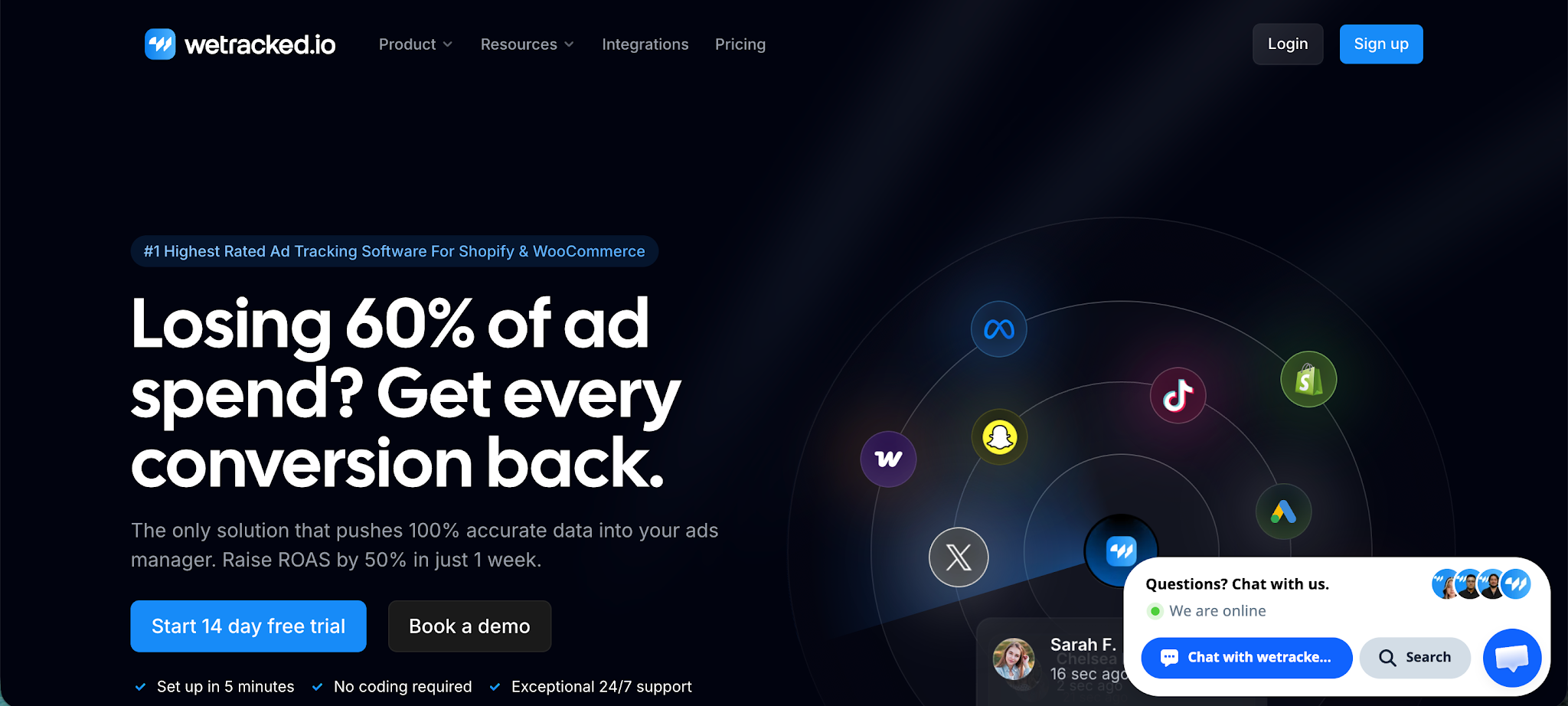
Wetracked.io is a Facebook attribution platform built for ecommerce brands that want a clearer understanding of which Meta campaigns actually drive purchases and profit. It focuses heavily on attribution accuracy, profitability analysis, and simplifying Facebook reporting for teams tired of comparing several dashboards that never fully match up.
Unlike many attribution tools that feel built mainly for analysts, wetracked.io puts a strong emphasis on usability and fast reporting. It works especially well for brands running large paid social budgets across Meta, Google, TikTok, and other channels that need cleaner attribution after privacy and tracking changes made native Facebook reporting less reliable.
Key features
- Multi-touch Facebook attribution - Tracks how Meta campaigns influence conversions across several touchpoints instead of relying only on last click reporting.
- Cross-channel reporting - Combines Meta, Google, TikTok, Shopify, and ecommerce performance data into centralized dashboards.
- Profitability tracking - Connects Facebook ad spend directly to margins, ROAS, customer value, and revenue outcomes.
- Creative performance analysis - Helps marketers identify which ads, creatives, and formats actually generate purchases.
- Customer journey visibility - Shows how shoppers move from first ad interaction to final conversion across devices and channels.
- Real-time attribution dashboards - Gives advertisers up-to-date visibility into Facebook campaign performance and sales trends.
- Shopping campaign analysis - Helps ecommerce brands track product-level advertising performance and purchase behavior.
- Custom reporting views - Lets teams build dashboards around the KPIs most important to their business goals.
- Performance alerts and anomaly tracking - Helps marketers quickly react to unusual drops, spikes, or attribution changes.
- Simplified attribution workflows - Makes Facebook attribution easier to understand without relying on overly technical enterprise analytics setups.
Wetracked.io works particularly well for ecommerce brands spending heavily on Meta ads and needing cleaner attribution than Facebook’s native reporting can provide. Its biggest strength is helping operators understand profitability and actual business impact instead of only surface-level campaign metrics.
Try wetracked.io today for free.
2. Ruler Analytics
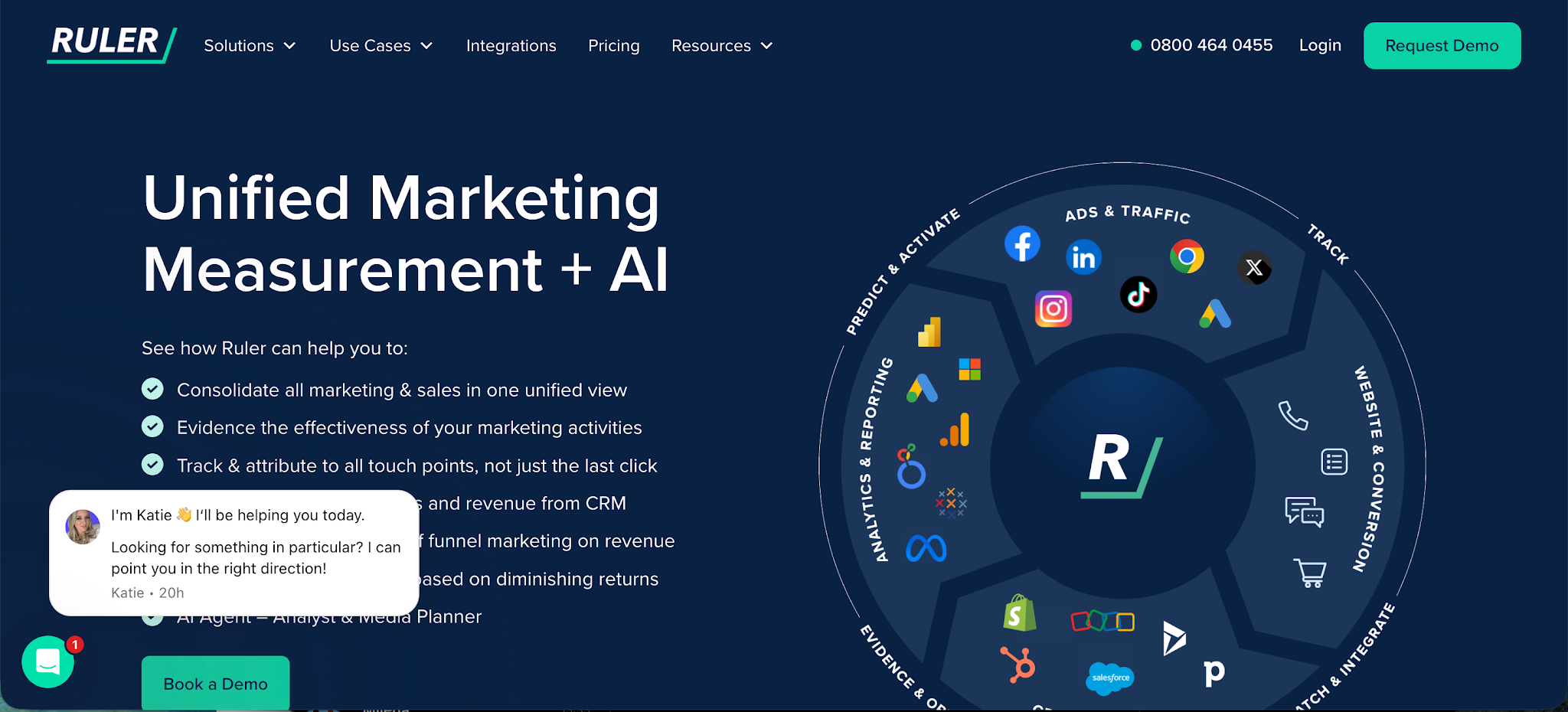
Ruler Analytics is a marketing attribution platform focused on connecting leads, calls, and revenue directly back to advertising campaigns. It is especially useful for businesses running Facebook lead generation campaigns where conversions happen later through sales calls, demos, or offline interactions instead of instant online purchases.
Key features
- Multi-touch attribution tracking - Tracks how Facebook ads and other channels contribute to leads and closed revenue over time.
- CRM and revenue integrations - Connects attribution data with CRM systems to show which Facebook campaign generated actual sales outcomes.
- Call tracking and offline attribution - Helps businesses attribute phone calls, booked meetings, and offline conversions back to campaigns.
- Lead journey reporting - Shows how prospects move from ad click to conversion across different touchpoints and channels.
- Revenue-focused dashboards - Helps marketers compare incremental business results with campaign costs and acquisition spend.
Ruler Analytics works particularly well for B2B companies and service businesses where conversions do not happen immediately after someone clicks a Facebook ad. Its strongest area is connecting advertising activity directly to pipeline and revenue instead of stopping attribution at form submissions.
The downside is that implementation can become fairly technical, especially when syncing CRMs, call tracking systems, and several advertising platforms together. Businesses looking for lightweight ecommerce attribution may also find the platform more focused on lead generation and offline sales workflows than direct purchase tracking.
3. Cometly
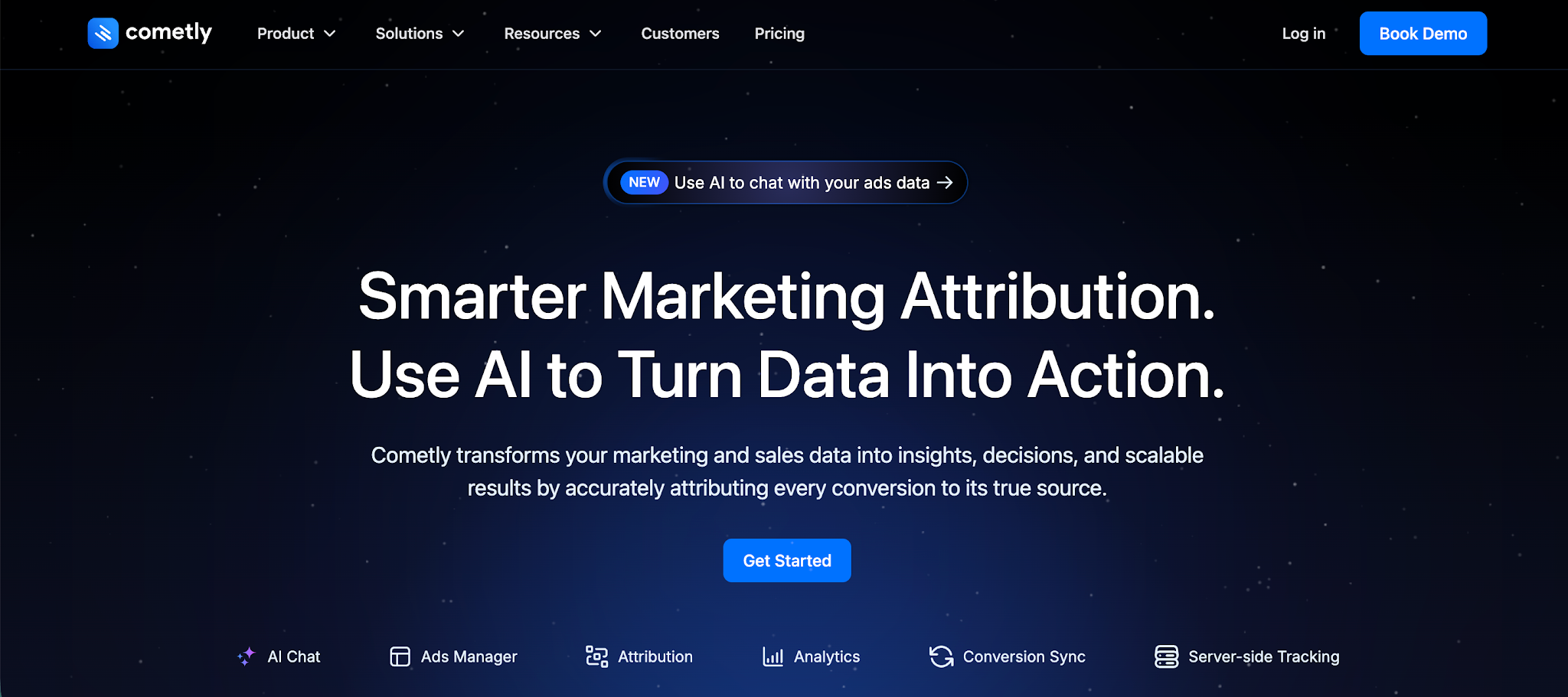
Cometly is an attribution app built for advertisers that want a clearer understanding of how paid campaigns contribute to revenue across Meta, Google, TikTok, and other channels. It is especially strong at showing how different touchpoints influence conversions after an ad click, making it popular with ecommerce brands and performance marketers focused on profitability instead of vanity metrics.
Key features
- Multi-touch attribution tracking - Tracks how campaigns, channels, and touchpoints contribute to purchases and revenue across the customer journey.
- Revenue attribution reporting - Connects campaigns directly to ROAS, customer lifetime value, and initial purchase value.
- Attribution model comparisons - Lets marketers compare first click, last click, linear, and custom attribution approaches side by side.
- Custom dashboards and reporting tables - Helps teams build reports around campaign profitability, conversion paths, and channel performance.
- Server-side tracking support - Improves attribution accuracy by reducing data loss caused by browser restrictions and privacy updates.
Cometly works particularly well for advertisers trying to understand whether their marketing investment is actually producing profitable growth. Its strongest area is helping marketers connect revenue back to campaigns instead of relying entirely on platform-reported conversions.
The downside is that setup can still take time, especially for businesses wanting advanced server-side ad tracking and CRM integrations. Smaller advertisers with simple funnels may also find the platform more advanced than they realistically need.
4. Northbeam
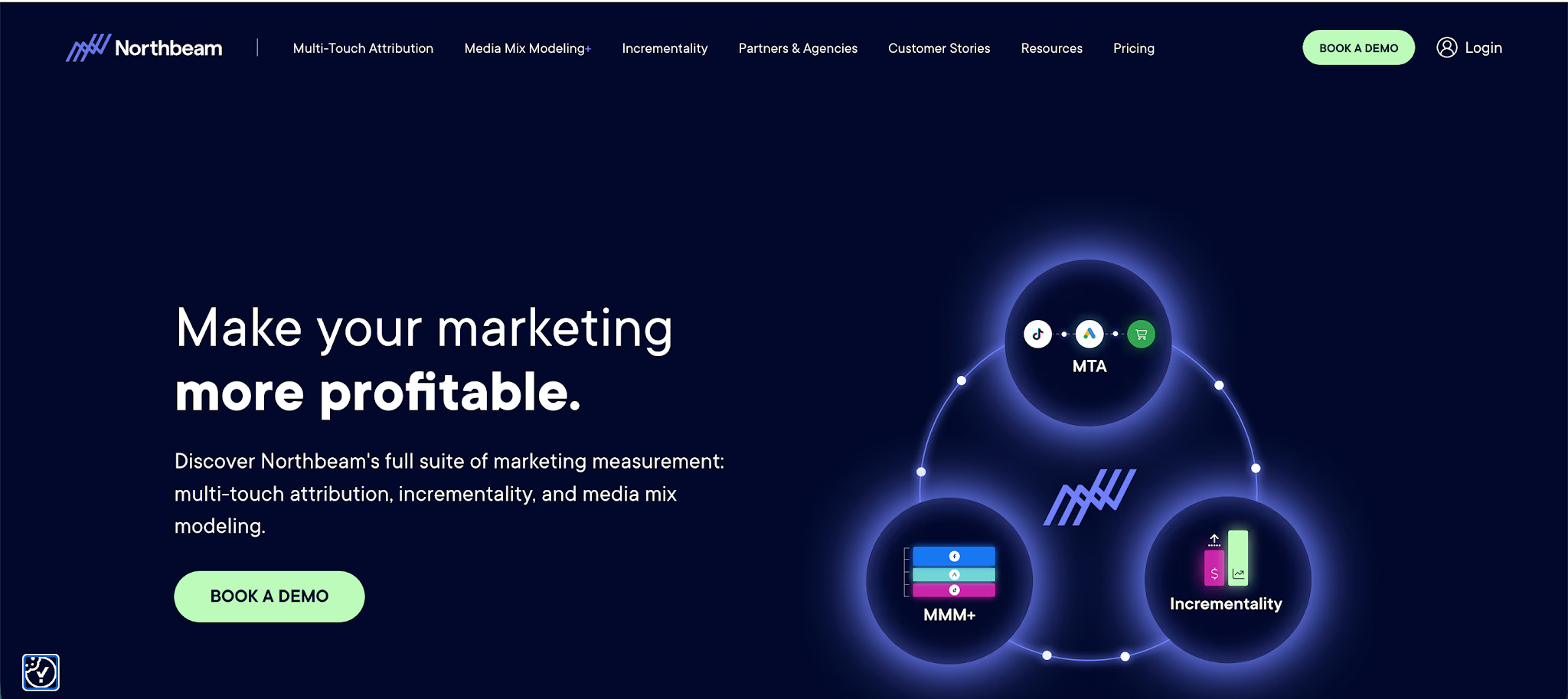
Northbeam is an ecommerce-focused attribution platform built for brands spending heavily across Meta, Google, TikTok, YouTube, and other paid channels. It is especially strong at revenue attribution and helping advertisers understand how campaigns influence purchases across both digital and traditional channels, instead of relying only on last click reporting.
Key features
- Universal attribution modeling - Combines several attribution approaches to give advertisers a broader view of the customer journey across campaigns and channels.
- Cross-channel revenue reporting - Tracks attributed revenue, ROAS, CAC, and campaign profitability across paid and owned media.
- Creative and ad analysis - Helps marketers compare creatives, campaigns, and ad sets across several platforms in one dashboard.
- Attribution model comparisons - Lets teams compare different attribution models and lookback windows on existing campaign data.
- First-party data tracking - Uses first-party transaction and ad performance data to improve attribution accuracy after privacy-related tracking changes.
Northbeam works particularly well for ecommerce brands running large paid acquisition programs and needing a clearer picture of which campaigns actually drive revenue. Its strongest area is helping operators analyze performance across channels without relying entirely on Meta or Google’s self-reported attribution numbers.
The downside is that Northbeam is built primarily for more advanced growth and media buying teams. Smaller businesses or advertisers with lower ad spend may find the platform expensive and more complicated than they realistically need. Proper implementation can also take time because the platform becomes most useful when deeply connected with several advertising and ecommerce systems.
5. Triple Whale
Triple Whale is an ecommerce focused Facebook attribution platform built mainly for Shopify brands running large amounts of paid social advertising. It is especially strong at helping advertisers understand how Facebook campaigns contribute to purchases and long term customer value when Meta’s native reporting becomes unreliable.
Key features
- Multi-touch Facebook attribution - Tracks how Facebook ads influence conversions across several touchpoints instead of relying only on last click reporting.
- Data-driven attribution model - Uses blended attribution reporting to help advertisers understand where purchases are actually coming from.
- Creative and campaign analysis - Helps marketers compare ad creatives, audiences, and campaign performance side by side.
- Subscription revenue tracking - Connects attribution reporting with repeat purchases and subscription revenue for ecommerce brands.
- Centralized marketing dashboards - Combines Meta, Google, TikTok, Shopify, and ecommerce performance data into one reporting interface.
Triple Whale works particularly well for ecommerce operators spending aggressively on Meta ads and needing clearer attribution after iOS tracking changes. Its biggest strength is simplifying profitability and revenue analysis for teams that do not want to manually piece together data from several dashboards.
The downside is that it is heavily ecommerce-focused, especially around Shopify. Businesses outside ecommerce or advertisers wanting highly customizable enterprise attribution setups may find the platform somewhat limiting. Pricing can also become difficult to justify for smaller stores with lower ad spend.
6. Adbeacon
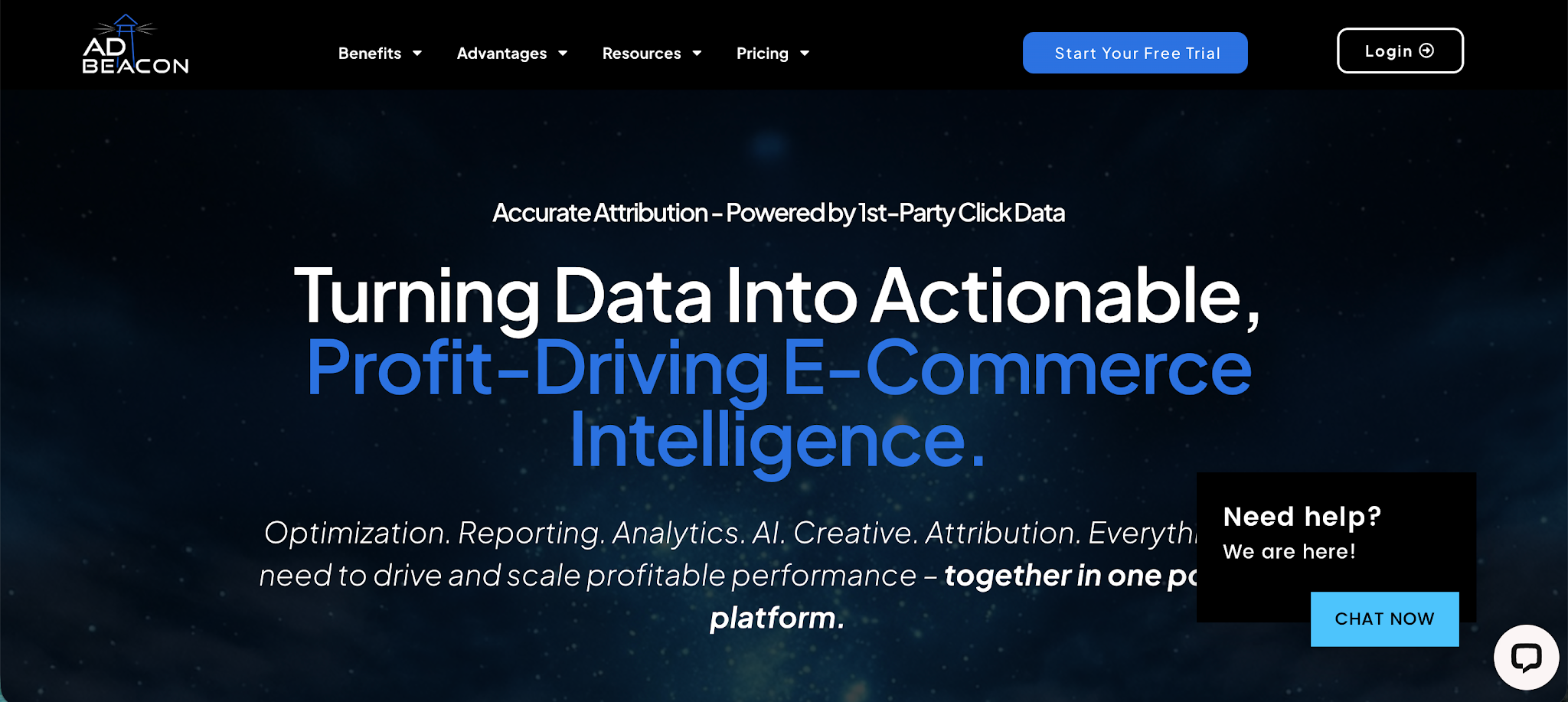
Adbeacon is a Facebook attribution platform built for advertisers that want cleaner conversion tracking and more reliable reporting than Meta’s native dashboard provides. It focuses heavily on accurate attribution across paid channels, making it especially useful for ecommerce brands frustrated with inconsistent Facebook conversion data after privacy and tracking changes.
Key features
- Multi-touch attribution tracking - Tracks how different ads, campaigns, and touchpoints contribute to conversions over time.
- Server-side tracking - Improves attribution reliability by reducing signal loss caused by browser restrictions and ad blockers.
- Custom attribution windows - Lets advertisers compare different attribution windows to understand how reporting changes across campaigns.
- Cross-platform reporting - Combines Facebook attribution data with Google, TikTok, Shopify, and other marketing platforms.
- Offline conversion tracking - Helps businesses connect offline conversions and CRM activity back to Facebook campaigns.
Adbeacon works particularly well for advertisers trying to move beyond Meta’s default attribution reporting. Its strongest area is helping brands understand where conversions are actually coming from instead of relying entirely on platform-reported numbers.
The downside is that setup still requires some technical work, especially for advertisers wanting advanced server-side events and custom attribution settings. Smaller businesses with simple campaign setups may also find some of the deeper attribution functionality unnecessary.
7. Hyros
Hyros is an enterprise marketing attribution platform built for advertisers spending heavily on Meta, Google, TikTok, YouTube, and other paid channels. It is especially strong at Facebook attribution because it focuses heavily on improving attribution data accuracy after privacy changes, browser restrictions, and signal loss started affecting ad accounts.
Key features
- Multi-touch attribution tracking - Tracks the full customer journey across ads, email, organic traffic, calls, and direct visits instead of relying only on Meta’s native attribution.
- Advanced attribution models - Helps marketers compare different attribution models and understand how channels assist conversions over time.
- Server-side tracking - Uses first-party and server-side tracking methods to improve attribution accuracy despite cookie and iOS limitations.
- Cross-platform reporting - Combines attribution data from Meta, Google, TikTok, YouTube, and other advertising platforms into centralized dashboards.
- Revenue and LTV analysis - Connects campaigns directly to purchases, customer lifetime value, and profitability metrics.
Hyros is particularly useful for brands spending serious money on paid acquisition and needing more reliable Facebook attribution than Meta’s default reporting provides. Its strongest area is stitching together conversion paths across devices, sessions, and channels to give advertisers a cleaner view of what actually drives revenue.
The downside is complexity. Proper implementation can take time, especially for businesses connecting CRMs, ecommerce stores, server-side events, and multiple ad accounts. Smaller advertisers with lower budgets may also find the platform more advanced and expensive than they realistically need.
8. AdEspresso
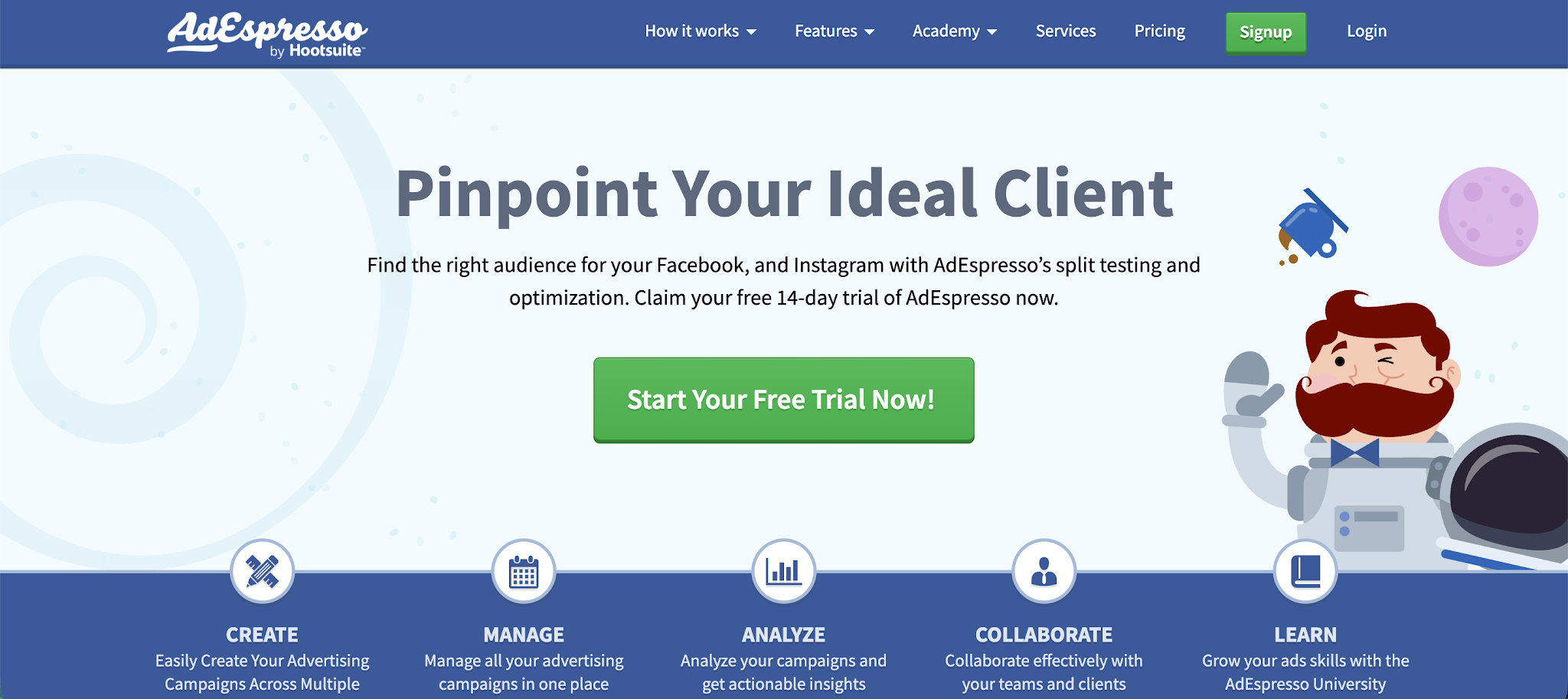
AdEspresso is a Facebook advertising and optimization platform built for marketers who want easier campaign management, reporting, and testing without getting buried inside Meta Ads Manager all day. While it is not a pure attribution platform focused only on conversion tracking, it does a solid job helping advertisers analyze Facebook campaigns and understand which creatives, audiences, and campaigns perform best across different attribution windows.
Key features
- Facebook Ads reporting - Tracks ROAS, CPC, CTR, conversions, and campaign performance metrics in one interface.
- A/B testing workflows - Helps advertisers test audiences, creatives, headlines, and ad copy variations quickly.
- Campaign optimization tools - Identifies underperforming ads and recommends budget or targeting adjustments.
- Custom reporting dashboards - Lets teams create simplified reports for campaigns, ad sets, and creative performance.
- Attribution window comparisons - Helps marketers compare how different attribution windows affect reported conversions and campaign results.
AdEspresso works especially well for smaller teams and agencies that want easier Facebook campaign analysis without relying entirely on Meta’s native interface. Its strongest area is simplifying testing and optimization workflows for advertisers managing many campaigns at once.
The downside is that attribution analysis is not as deep as dedicated attribution platforms. Businesses needing highly advanced multi-touch attribution, cross-channel revenue analysis, or server-side tracking may eventually need a more specialized solution.
Start tracking your Facebook ad performance accurately
Facebook attribution is messy now, and it is probably not getting simpler anytime soon.
Between privacy changes, browser restrictions, cross-device behavior, and increasingly fragmented customer journeys, relying only on Meta’s native reporting creates blind spots that become expensive fast once ad spend starts scaling.
That is why more advertisers are investing in dedicated attribution tools. Better attribution does not just improve reporting. It changes how budgets are allocated, which campaigns get scaled, how creatives are evaluated, and how confidently teams can make decisions around paid acquisition.
Some businesses only need lightweight reporting improvements. Others need server-side tracking, multi-touch attribution, offline conversion syncing, or deeper profitability analysis across several channels. The right platform depends on how complex your acquisition strategy has become and how much inaccurate reporting is already costing you.
If you want cleaner Facebook attribution without getting buried inside overly technical enterprise software, wetracked.io is the right choice.
Try it today, completely free.