.png)
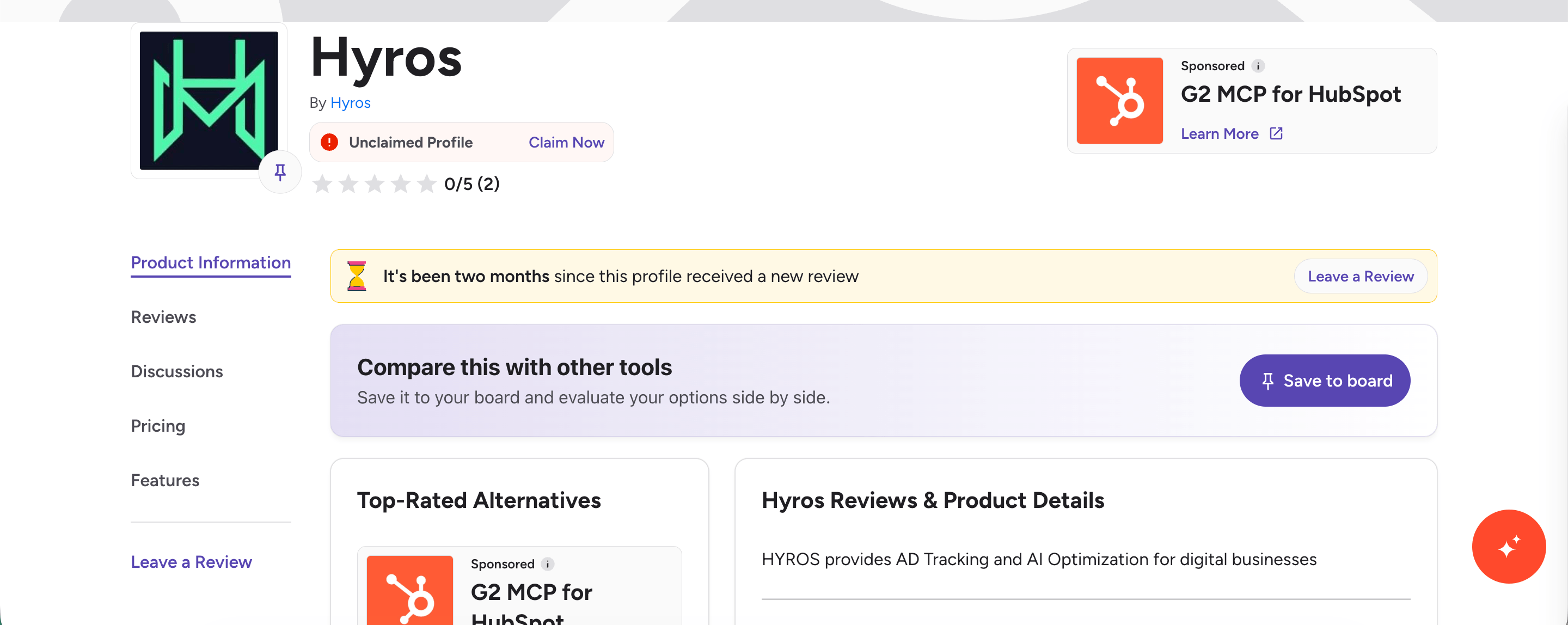
Hyros is one of the most popular ad tracking platforms that gives marketers better insights into their ad spend and prevents them from burning their clients' budgets. While it has a lot of market presence, Hyros barely has any reviews on official platforms such as G2 and Capterra. On TrustPilot, most of the reviews are related to Hyros' customer support team.
The good news is that there are plenty of other spaces online where you can learn about Hyros as an ad platform. Today, we summarize those findings to tell you what real Hyros users are saying, so you can determine if Hyros is worth your time and money or if you should consider a Hyros alternative instead.
TL;DR
- Hyros can uncover sales that Meta and Google fail to attribute, which may stop marketers from cutting campaigns that are profitable over a longer customer journey.
- It works best for businesses with multiple acquisition channels, longer sales cycles, and enough paid ad spend for attribution errors to affect major budget decisions.
- The Chrome extension is one of its strongest features because it shows Hyros revenue and cost data inside Google Ads and Meta Ads Manager.
- Hyros is relatively easy to use once everything is configured, but the initial tracking setup can require significant technical work and support.
- Hyros pricing can rise as revenue or advertising volume grows, and several Reddit users felt the product became too expensive for the attribution clarity it provided.
- Hyros tracking is not perfectly accurate. Marketers still need to compare its conversion data with backend sales, payment records, UTM data, and native ad platform reports.
Get the better Hyros alternative for ad tracking. Try wetracked.io for free today.
Hyros pros and cons according to real reviews
If you have ever compared Meta Ads Manager numbers with actual sales data, you already understand why Hyros exists.
Ad platforms regularly miss conversions, claim credit for the same purchase, or report a version of the customer journey that does not match what happened in your store. Hyros promises to close those gaps with more accurate data and a clearer view of attribution.
According to Reddit users, it sometimes delivers. Marketers have used Hyros data to identify profitable campaigns, compare sales data against platform tracking, and understand which marketing efforts influenced a purchase.
The criticism is harder to ignore. Hyros can get expensive, the setup is not always straightforward, and accurate tracking is far from guaranteed. Some marketers say the attribution software changed how they bought media. Others concluded that it was another dashboard telling a slightly different version of the truth.
A few themes come up repeatedly:
- Hyros is most useful when your funnel is complicated.
- The Chrome extension is one of its clearest strengths.
- Pricing and customer support attract the most frustration.
- Hyros tracking should never be treated as unquestionable truth.
We looked at Reddit almost exclusively because Hyros has little to no presence online on other platforms:
Pro: Hyros can uncover conversions missed by ad platforms
The strongest argument for Hyros is simple. Meta and Google do not always know when one of their clicks leads to a sale.
A customer might click an ad, return several days later, and make a purchase on another device. They might reject cookies or move between several channels before converting. By the time the sale happens, the original ad platform may have lost part of the trail.
Reddit users who like Hyros often say it caught conversion data that Facebook or Google had missed. That does not mean every conversion was assigned correctly, but it gave them another view of their actual sales data.
One marketer estimated that Hyros uncovered an additional 10% to 20% of conversions that were not visible through the Meta pixel or a basic Conversion API setup.
Another user described a more meaningful outcome. The campaigns looked unprofitable in the original reporting, but the longer-term sales data told a different story:
"Implementing it resulted in showing that their ads weren’t profitable, to showing they were profitable over time. So we kept running the ads."
That is the kind of result that can justify paying for attribution software. Hyros did not improve the campaigns directly. It changed the decision by showing revenue that the advertiser could not see through platform tracking alone.
Still, the value depends on whether the additional Hyros data is genuinely more accurate, rather than simply a different attribution model.
Pro: Hyros can make sense of a complicated customer journey
Hyros becomes easier to justify when customers rarely click one ad and buy immediately.
A typical purchase might involve Meta Ads, Google Ads, an email sequence, a direct website visit, and a sales call. Each channel sees only part of that journey, while every platform has an incentive to claim as much credit as possible.
An independent attribution platform can bring those interactions together. For marketers managing several acquisition channels, that broader view can be more useful than checking each dashboard separately.
Reddit users generally see more value in Hyros when a business has:
- Several products or offers
- Longer sales cycles
- Multiple ad platforms
- Online and offline conversion points
There is an important catch. Hyros cannot create comprehensive data when the business is feeding it incomplete customer data.
Poor event configuration, missing checkout information, and weak identity matching will still affect the final attribution data. Hyros can organize the signals it receives, but it cannot recover information that was never captured.
For a complicated business model, that broader reporting can still be valuable. For a simple ecommerce store with one main acquisition channel, the difference may be far less meaningful.
Pro: The Chrome extension is genuinely useful
The Hyros Chrome extension is one of the few features Reddit users praise without attaching many conditions.
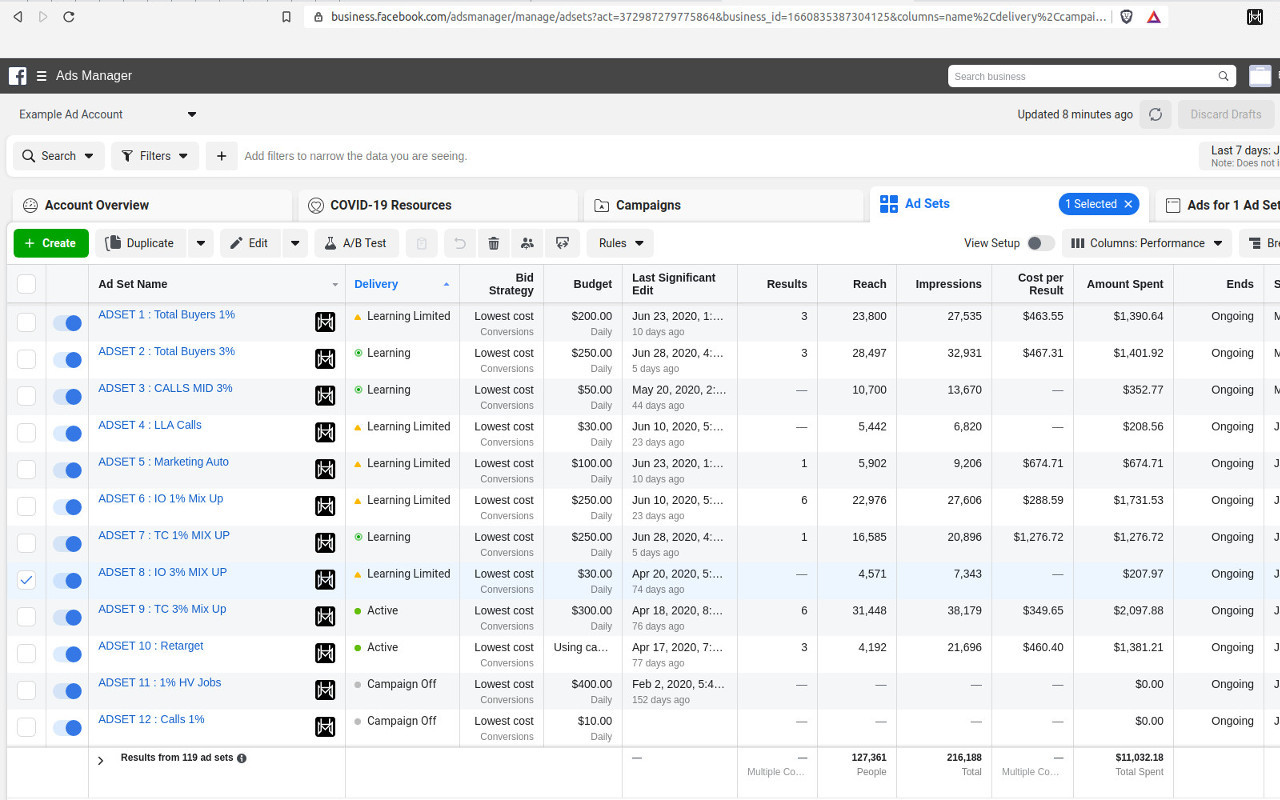
It places Hyros metrics directly inside Facebook and Google advertising dashboards. Instead of moving between several reports, the marketer can see external revenue and cost figures while looking at the campaigns themselves.
One user explained the appeal well:
"Hyros is simple, easy, fast, and has the nifty Chrome extension that tells you what your CPL and revenue is in the FB ads and Google Ads dashboards."
Another commenter said they knew several people who kept paying for Hyros largely because of the extension.
That makes sense. Most marketers do not want another attribution platform that requires them to rebuild every report from scratch. They want better information inside the tools they already use.
Seeing Hyros data inside Google Ads or Meta Ads Manager also makes discrepancies easier to spot. You can compare native reporting against the external tracking system without opening another tab and matching campaigns manually.
The extension does not solve questionable attribution, but it does make the product easier to use day to day.
Pro: Hyros data can lead to better media buying decisions
Attribution tools only matter when they change what you do next.
Knowing that one channel influenced a purchase is interesting. Knowing that a supposedly unprofitable campaign generated enough delayed revenue to stay active is commercially useful.
That is where the positive Reddit stories carry the most weight. Some marketers say Hyros helped them avoid turning off ads that looked weak inside Facebook but produced sales over a longer period.
Another media buyer said Hyros was helpful because Facebook attribution did not match the results they were seeing, even when they used UTM parameters.
For marketers spending heavily on paid ads, small attribution errors can lead to large budget mistakes. A campaign does not need to be wildly misreported to cause problems. It only needs to look slightly worse than another campaign competing for the same budget.
In the best case, Hyros helps marketers understand exactly which ads work and which ads merely look good inside an advertising dashboard.
That is also where accurate attribution has real value. Better attribution data can support smarter budget allocation, but only when the marketer trusts the underlying sales data enough to act on it.
Pro: The interface is fairly approachable once setup is finished
Hyros is not usually described as difficult to use after the tracking is configured.
The reports are designed for marketers rather than data analysts. Reddit users have described the platform as simple, fast, and easier to understand than some competing attribution tools.
That does not mean everyone agrees that Hyros has the best user-friendly interface. One commenter argued that Triple Whale had moved ahead in both interface design and tracking quality.
Both opinions can be true. Hyros may be easy to operate without being the most polished attribution platform available.
The everyday experience also needs to be separated from implementation. Checking reports may be simple. Getting every event, checkout, domain, and integration configured correctly can be far more demanding.
Con: Hyros gets expensive quickly
Price is the most consistent Hyros complaint on Reddit.
Users say the fee can rise as revenue or advertising volume increases. That pricing model may be acceptable when the value rises at the same pace, but several comments suggest customers were not always prepared for the increases.
One customer put the frustration plainly:
"They've been crappy with customer service and failed to tell me that they need more money if my revenue gets beyond certain thresholds."
Other Reddit discussions describe different customers receiving different quotes, with pricing increasing as the account grows.
A newer thread was started by someone who said Hyros worked for them but was becoming too expensive to keep.
The real question is not whether Hyros is expensive in isolation. It is whether the attribution data leads to decisions worth more than the subscription.
A company spending hundreds of thousands of dollars on ads may recover the cost by preventing one poor budget decision. A smaller advertiser might pay a significant monthly fee to confirm information that was already reasonably clear.
Con: Ad tracking setup can be more involved than the sales pitch suggests
Hyros is not a tool you install and forget about five minutes later.
The tracking system needs access to the right events, domains, checkout data, and advertising accounts. When the customer journey crosses several websites or sales systems, the implementation becomes even more sensitive.
One Reddit commenter described the setup as involved and said the Hyros team needed to configure it correctly. The same person believed the product made the most sense for companies spending at least $50,000 per month across several platforms.
That should matter to anyone comparing attribution software. A clean dashboard does not tell you how much work went into producing the data behind it.
Implementation may involve:
- Configuring website and checkout events
- Connecting payment and advertising platforms
- Checking whether conversions are being duplicated
- Testing how customer identities are matched
A weak setup can create confident reports from unreliable inputs. Before deciding whether Hyros works, marketers need to know whether the system was configured properly in the first place.
Con: Customer support is inconsistent
The customer service team receives mixed feedback, but the negative experiences are serious enough to consider.
Several Reddit users mention unanswered questions during setup. That is a problem for any analytics product, but it is particularly concerning when customers depend on support to verify that their attribution data is trustworthy.
In one thread, the original poster said they could not get clear answers about Facebook event configuration and the correct implementation of the Hyros pixel.
Another customer complained about both service quality and unexpected pricing thresholds:
"They've been crappy with customer service and failed to tell me that they need more money if my revenue gets beyond certain thresholds."
These are individual experiences, not proof that support is poor for every account. They do show how much the product depends on good onboarding.
When marketers are paying for accurate tracking, slow or unclear support creates a second problem. They are not only waiting for an answer. They are also left wondering whether the reports they are using are correct.
Con: Hyros accuracy is far from settled
This is the biggest issue with Hyros, because accuracy is the product.
Positive Reddit reviews say Hyros found purchases that Meta or Google missed. Negative reviews say Hyros missed sales too, assigned conversions incorrectly, or became unreliable over time.
One user said Hyros did not provide accurate tracking for their account, even though they knew other marketers who liked the Chrome extension.
Another advertiser said both Facebook and Hyros missed purchases that were visible through UTM tracking. After noticing the discrepancies, they stopped relying on one source and began comparing several data sets.
A separate commenter described Hyros as glitchy.
The practical takeaway is that Hyros data should be checked against backend revenue, payment processor records, ecommerce sales data, and native conversion data.
Replacing blind trust in Meta with blind trust in Hyros does not solve the problem. It just changes which dashboard gets the final word.
Con: Perfect attribution does not exist
Some Hyros criticism is fair. Some of it reflects limitations that every attribution platform faces.
Customers change devices. They clear cookies. They reject tracking. They see an ad, tell someone else about the product, and create a conversion path that no tracking system can reconstruct perfectly.
A technical Reddit commenter questioned whether any attribution tool could assign every sale to a source without introducing questionable assumptions. Their point was that marketers often have to choose between incomplete data that is probably correct and complete-looking data that may contain false matches.
Another discussion reached a similar conclusion. The commenters recommended comparing store transactions, Facebook reporting, and first-party website information rather than expecting one platform to produce perfectly accurate attribution.
Hyros may provide more accurate data than native platform tracking in some cases. It cannot remove the uncertainty built into modern advertising measurement.
That distinction matters. Hyros can improve attribution without making attribution exact.
Con: Hyros is probably excessive for smaller advertisers
Reddit users disagree about the spending level where Hyros becomes worthwhile, but most place it well above a typical small advertising account.
Some suggest that advanced attribution tools only become useful once a business spends six figures per month. Others mention thresholds closer to $15,000 or $50,000.
There is no universal number. The right threshold depends on funnel length, channel mix, conversion value, and how often attribution errors change budget decisions.
Still, smaller advertisers need to be realistic about what they are buying.
Hyros is easier to justify when:
- Several channels are claiming the same conversions
- Customers take weeks to purchase
- Offline sales need to be connected with paid ads
- Small reporting errors create large budget consequences
A business running one main campaign to one checkout page may gain little from another layer of attribution software.
Con: Better reporting does not fix weak campaigns
Hyros can tell you more about campaign performance. It cannot make a poor offer attractive or turn weak creative into strong creative.
This sounds obvious, but attribution products are often discussed as though better measurement automatically leads to better results.
One Reddit user argued that advertisers should first improve the customer data sent to Meta and Google before investing in another reporting layer.
Another commenter said improving Event Match Quality could have a bigger effect on performance than paying for advanced attribution tools.
That is a fair criticism. Hyros can show that a campaign performed better than Meta reported. It cannot fix a campaign that is genuinely unprofitable.
The platform may help marketers make better decisions about their marketing efforts. The quality of those decisions still depends on the offer, creative, audience, and conversion process.
Con: Much of the functionality can be recreated more cheaply
Hyros packages several tracking and reporting functions into one product. Businesses with analytics expertise may be able to build enough of that functionality using tools they already have.
One Reddit post argued that a properly configured Google Analytics account could cover most of what many advertisers need. The suggested setup included ecommerce data, referral exclusions, cross domain tracking, and correctly configured conversion events.
Another user suggested combining Google Tag Manager, server-side tracking, Meta Conversions API, GA4, and Looker Studio.
That alternative is not free in practice. Someone still needs to build, test, and maintain it.
The difference is where the cost goes. Hyros charges for a packaged attribution platform. A custom setup shifts more of the expense into internal work or specialist support.
For teams without analytics resources, Hyros may still be the easier option. For teams that already manage their own customer data and tracking infrastructure, the subscription can be harder to justify.
Is Hyros worth it?
User feedback suggests that Hyros is neither a miracle product nor an outright waste of money as a campaign attribution software.
It appears most valuable for businesses with high advertising spend, several acquisition channels, and a long customer journey. In those cases, even a modest improvement in attribution data can affect major media buying decisions.
Its clearest strengths are the Chrome extension, the ability to compare reporting across ad platforms, and the possibility of identifying revenue that native dashboards missed.
The weaknesses are equally clear. Pricing rises quickly, setup can demand more work than expected, and the accuracy of Hyros tracking remains disputed. Customer support complaints also make the implementation risk harder to dismiss.
The best way to think about Hyros is as another measurement layer, not an unquestionable source of truth.
It can help you understand exactly which ads work when Meta and Google leave gaps. It can also produce another set of numbers that need to be checked against your backend sales data.
For businesses losing meaningful amounts of money because of attribution gaps, that extra layer may be worth paying for. For smaller advertisers with simple funnels, cleaner platform tracking and a properly configured analytics setup may be enough.
Get the better Hyros alternative for ad tracking
Hyros can give marketers a better view of attribution, but the Reddit feedback points to the same recurring problems: rising costs, difficult setup, inconsistent support, and data that still needs to be checked against backend sales.
wetracked.io offers a cleaner answer for performance marketers who want attribution clarity without adding another complicated system to their stack. It connects purchases with the campaigns and ad accounts that generated them, giving teams a clearer view of performance across Meta and Google.
Compared with many Hyros alternatives, wetracked.io is easier to get running and does not require marketers to spend weeks untangling implementation issues before they can trust the reports. You get direct campaign level insight without relying entirely on the numbers reported by each advertising platform.
The result is a simpler way to see which ads are producing sales and where your budget is actually paying off.
Try wetracked.io for free and see how our attribution data compares with the numbers inside your ad accounts.


.png)
.png)


