.png)
Most PPC campaigns do not fail because the ads are terrible. They fail because advertisers keep making decisions using incomplete data.
Google Ads says one campaign is performing well. Meta claims another one deserves credit for the same sale. Analytics platforms disagree with both. Meanwhile, budgets keep moving, CPCs keep rising, and nobody wants to explain why performance suddenly dropped after scaling spend.
That is why serious advertisers rely on PPC analysis tools instead of native ad dashboards alone.
Some platforms are built around keyword research and competitor tracking. Others focus on attribution, reporting, automation, shopping campaign analysis, or identifying wasted spend before it becomes expensive. The difference between a profitable campaign and a money pit is often hidden inside reporting most teams barely have time to review properly.
We put together this list to break down which PPC analysis tools are actually worth using in 2026, depending on the kind of campaigns you run and the problems you are trying to solve.
TL;DR
- wetracked.io: best for ecommerce brands that want clearer PPC attribution and profitability reporting across channels
- Google Analytics + Google Ads: best free setup for tracking PPC conversions and on site behavior together
- Google Keyword Planner: best for PPC keyword research and campaign planning before launch
- SpyFu: best for competitor PPC research and uncovering profitable keyword gaps
- PPC.io: best for agencies automating campaign management across multiple ad platforms
- Adthena: best for enterprise level PPC intelligence and competitor monitoring
- Semrush: best for combining PPC keyword research with broader competitor analysis
- Optmyzr: best for advanced PPC automation and large scale account optimization
- WordStream: best for smaller businesses needing guidance around PPC optimization
- AdEspresso: best for simplifying ad testing and Meta campaign management
- Wask.co: best for smaller teams automating PPC workflows without technical complexity
- Databox: best for centralized PPC dashboards and automated client reporting
What is a PPC analysis tool, and why do you need one?
A PPC analysis tool helps marketers track, measure, and improve the performance of paid advertising campaigns across platforms like Google Ads, Meta Ads, Microsoft Ads, LinkedIn Ads, and TikTok Ads.
At a basic level, these tools show metrics like clicks, conversions, ROAS, CPC, CTR, and ad spend. But the better platforms go much deeper than that. They help advertisers understand which keywords, audiences, creatives, landing pages, and campaigns are actually generating profitable results instead of just traffic.
That matters because native ad platform reporting only tells part of the story.
Google Ads focuses on Google traffic. Meta focuses on Meta conversions. Meanwhile, customers often interact with several campaigns before they buy anything. Without proper PPC analysis, it becomes very easy to scale the wrong campaigns, waste budget on weak audiences, or pause ads that are quietly assisting conversions behind the scenes.
Some PPC analysis tools focus heavily on reporting and dashboards. Others specialize in keyword research, competitor intelligence, attribution tracking, automation, bid optimization, or campaign testing. The right choice depends on how you actually run paid advertising.
For smaller businesses, a simple reporting setup may be enough to spot obvious problems and track performance trends. But for agencies, ecommerce brands, and larger advertisers spending significant money on paid acquisition, PPC analysis tools become essential for controlling costs, improving targeting, and making smarter optimization decisions over time.
Key features to look for
One of the most important features is cross-platform reporting. Most advertisers run campaigns across several channels, so your tool should combine data from Google Ads, Meta Ads, Microsoft Ads, LinkedIn Ads, and analytics platforms into one place instead of forcing you to jump between dashboards.
Another major feature is conversion and attribution tracking. Clicks alone do not tell you much. Good PPC analysis software should connect campaigns to purchases, leads, revenue, and profitability so you can see what is actually driving results.
For search advertisers, keyword analysis and search term reporting are critical. Strong tools help identify wasted spend, negative keyword opportunities, profitable search terms, and keyword gaps competitors may be exploiting.
You should also look at automation features. Platforms with bid adjustments, budget pacing, optimization rules, and alerts can save a huge amount of time once campaigns start scaling.
For agencies and larger teams, custom dashboards and reporting tools matter as well. Automated reports, white-label dashboards, and customizable KPIs make campaign monitoring much easier across clients and stakeholders.
Finally, think about usability. Some PPC platforms are built for analysts and experienced media buyers, while others focus more on helping smaller teams quickly understand campaign performance without needing advanced technical knowledge.
The best PPC analysis tools to track campaign performance in 2026
Whether you're an in-house marketer looking for help with budget allocation or you run an agency that needs accurate and real-time budget tracking, here are some of the best options for your team.
1. wetracked.io

Wetracked.io is a PPC reporting and attribution platform built for ecommerce brands that need a clearer understanding of which campaigns actually drive revenue. It focuses heavily on attribution accuracy, profitability tracking, and simplifying PPC reporting across multiple channels without forcing teams into overly technical dashboards.
Unlike many of the best PPC tools that focus mainly on campaign management or keyword optimization, wetracked.io is strongest at connecting ad spend directly to conversion data and real business outcomes. It works especially well for brands running shopping campaigns and paid acquisition across Meta, Google, TikTok, and other advertising platforms.
Key features
- Cross-channel PPC reporting - Combines campaign data from multiple channels into centralized dashboards for easier performance analysis.
- Multi-touch attribution - Tracks how ads, campaigns, and touchpoints contribute to purchases and revenue over time.
- Profitability dashboards - Connects ad spend directly to margins, ROAS, customer value, and overall campaign profitability.
- Creative performance analysis - Helps marketers identify which ads, creatives, and formats actually generate conversions.
- Real-time campaign monitoring - Gives advertisers live visibility into PPC reporting, sales trends, and campaign performance.
- Shopping campaign analysis - Helps ecommerce brands track product-level advertising performance and purchase behavior.
- Custom reporting views - Lets teams build dashboards around the KPIs most important to their business goals.
- Performance alerts and anomaly tracking - Helps marketers quickly react to unusual spikes, drops, or budget inefficiencies.
- Attribution-focused conversion tracking - Improves visibility into conversion data across paid platforms and ecommerce stores.
- Simplified analytics workflows - Makes deeper analysis easier for marketers and operators without relying on complex BI software.
wetracked.io works really well for ecommerce brands spending aggressively on paid acquisition and needing cleaner attribution reporting than native ad platforms provide. Its biggest strength is helping advertisers understand profitability instead of only surface-level PPC metrics.
The downside is that it is less focused on keyword research, bid automation, or direct campaign management compared to traditional PPC optimization tools. Businesses mainly looking for search term analysis or campaign editing workflows may still need additional PPC software alongside it.
2. Google Analytics + Google Ads

Google Analytics and Google Ads together are free tools that form one of the most widely used PPC analysis setups for tracking campaign performance, conversions, and on site behavior. When connected properly, they give advertisers a much clearer view of what happens after someone clicks an ad instead of stopping analysis at impressions and clicks.
Key features
- Conversion tracking integration - Connects Google Ads campaigns directly with purchases, form submissions, and other website conversions.
- Audience and behavior analysis - Helps marketers understand how paid traffic behaves after landing on the website.
- Cross campaign reporting - Tracks performance across campaigns, keywords, ad groups, and landing pages in one reporting flow.
- Attribution reporting - Shows how different touchpoints and campaigns contribute to conversions over time.
- Remarketing audience creation - Lets advertisers build audiences based on website behavior and campaign engagement.
This setup works well for businesses that rely heavily on Google Ads and want more context around user behavior, conversion quality, and campaign profitability. It gives advertisers much better visibility than using Google Ads reporting alone.
The downside is that the setup can become complicated quickly. Incorrect tagging, missing events, or broken integrations can lead to misleading data and attribution gaps. Reporting inside Google Analytics can also feel overly technical for smaller teams that just want simple PPC insights without heavy customization.
3. Google Keyword Planner

Google Keyword Planner is Google’s native keyword research tool built directly into the Google Ads platform. It is mainly used for discovering search keywords, estimating traffic potential, and planning PPC campaigns before launching ads.
Key features
- Keyword discovery tools - Helps advertisers find new search terms related to products, services, and campaign topics.
- Search volume estimates - Shows average monthly searches, competition levels, and estimated keyword demand.
- Cost per click forecasting - Provides estimated CPC ranges and traffic forecasts for different keyword groups.
- Campaign planning support - Helps marketers organize keywords into campaigns and ad groups before launch.
- Location and device targeting - Lets advertisers analyze keyword trends by country, region, language, and device type.
Google Keyword Planner works best during campaign research and planning stages. Its strongest area is helping advertisers understand how people search on Google before spending money on ads.
The downside is that it is pretty limited compared to dedicated PPC analysis platforms. It does not provide deep competitor analysis, attribution reporting, or campaign optimization tools. Search volume ranges can also feel vague for accounts with low ad spend, which makes detailed forecasting harder for smaller advertisers.
4. SpyFu

SpyFu is a competitive PPC and SEO research platform focused on helping marketers uncover what competitors are doing in paid and organic search. It is especially useful for advertisers looking to reverse engineer competitor keyword strategies, ad copy, and bidding behavior across major search engines.
Key features
- Competitor keyword analysis - Shows which keywords competitors bid on and how those campaigns change over time.
- Historical ad tracking - Lets marketers view older PPC ads, messaging changes, and campaign history.
- Keyword opportunity research - Helps advertisers discover high-value keywords capable of driving more targeted traffic.
- PPC performance estimates - Tracks estimated ad spend, clicks, rankings, and other key metrics across competitor accounts.
- SERP and domain comparisons - Makes it easy to compare competitor visibility, keyword overlap, and advertising strategies.
SpyFu works particularly well as a competitive intelligence tool. Its biggest strength is helping advertisers quickly uncover what competitors are likely spending money on and where there may be profitable gaps in the market.
The downside is that it is primarily a research platform rather than a live PPC management system. Unlike some other tools, it does not focus heavily on attribution, automation, or campaign optimization workflows. Data estimates can also vary since competitor ad spend and traffic numbers are modeled rather than pulled directly from ad accounts.
5. PPC.io

PPC.io is a PPC management and optimization platform built for advertisers running campaigns across Google Ads, Microsoft Ads, Amazon Ads, and paid social platforms. It focuses heavily on automation and workflow efficiency, making it especially useful for agencies and performance marketers managing large numbers of campaigns.
Key features
- Cross-platform campaign management - Lets teams monitor and optimize campaigns across multiple advertising platforms from one interface.
- Automated optimization rules - Helps advertisers automate bidding, budget adjustments, keyword management, and campaign actions.
- Custom reporting dashboards - Tracks ROAS, conversions, CPC, CTR, and other PPC metrics in centralized reports.
- Keyword and search term analysis - Helps marketers identify wasted spend, negative keywords, and new optimization opportunities.
- Team collaboration tools - Makes it easier for agencies and internal teams to organize workflows, notes, and campaign changes.
PPC.io is strongest for operational efficiency and campaign management. Agencies handling many clients often use it to reduce repetitive tasks and centralize PPC workflows across different platforms.
The downside is that it focuses more on optimization and management than advanced attribution or competitive intelligence. Businesses looking for deep customer journey analysis or predictive analytics may still need additional PPC analysis tools alongside it.
6. Adthena

Adthena is a search intelligence and competitive PPC analysis platform built for advertisers that want deeper visibility into the paid search market. It is especially useful for larger brands and ecommerce businesses that need PPC intelligence around competitors, bidding behavior, and search demand trends across multiple platforms.
Key features
- Competitive search monitoring - Tracks competitor visibility, impression share, and PPC ads across large keyword sets.
- Keyword intelligence tools - Gives advertisers detailed keyword data around CPC trends, search demand, and competitive movement.
- Market share analysis - Helps brands understand how they compare against competitors in paid search auctions.
- Ad copy and creative tracking - Monitors active ads running across competitor campaigns and highlights messaging changes over time.
- Strategic bidding insights - Helps marketers identify wasted spend, bidding opportunities, and market gaps across campaigns.
Adthena is particularly strong for competitive analysis and paid search strategy. Large advertisers often use it to spot shifts in the market before they become obvious inside native advertising platforms.
The downside is that it is more of a PPC intelligence platform than a full PPC management tool. Teams looking for campaign automation, attribution reporting, or direct optimization workflows will still need additional software alongside it. Smaller businesses may also find the platform more advanced than necessary for everyday PPC management.
7. Semrush

Semrush is a digital marketing platform that combines SEO, PPC research, competitor analysis, and advertising intelligence in one toolset. For PPC teams, it is especially useful for keyword research and competitive analysis, particularly when trying to identify profitable keywords and uncover gaps in competitor campaigns.
Key features
- PPC keyword research - Helps advertisers discover relevant keywords based on volume, competition, CPC, and search intent.
- Competitor ad analysis - Shows active ads, landing pages, keyword targeting, and paid search strategies used by competitors.
- Keyword gap analysis - Helps marketers compare performance and identify missed keyword opportunities across campaigns.
- Advertising research tools - Tracks historical PPC trends, ad copy variations, and competitor bidding behavior.
- Cross-channel marketing insights - Combines SEO, PPC, and content performance data into one reporting environment.
Semrush is strongest during campaign planning and competitor research rather than live PPC optimization. It does an excellent job helping marketers understand what competitors are bidding on and where profitable opportunities may exist.
The downside is that it is not really a campaign management platform. Advertisers still need separate tools for bid automation, attribution, and day-to-day PPC optimization workflows. Pricing can also become expensive once teams need access to more advanced reporting and historical data.
8. Optmyzr
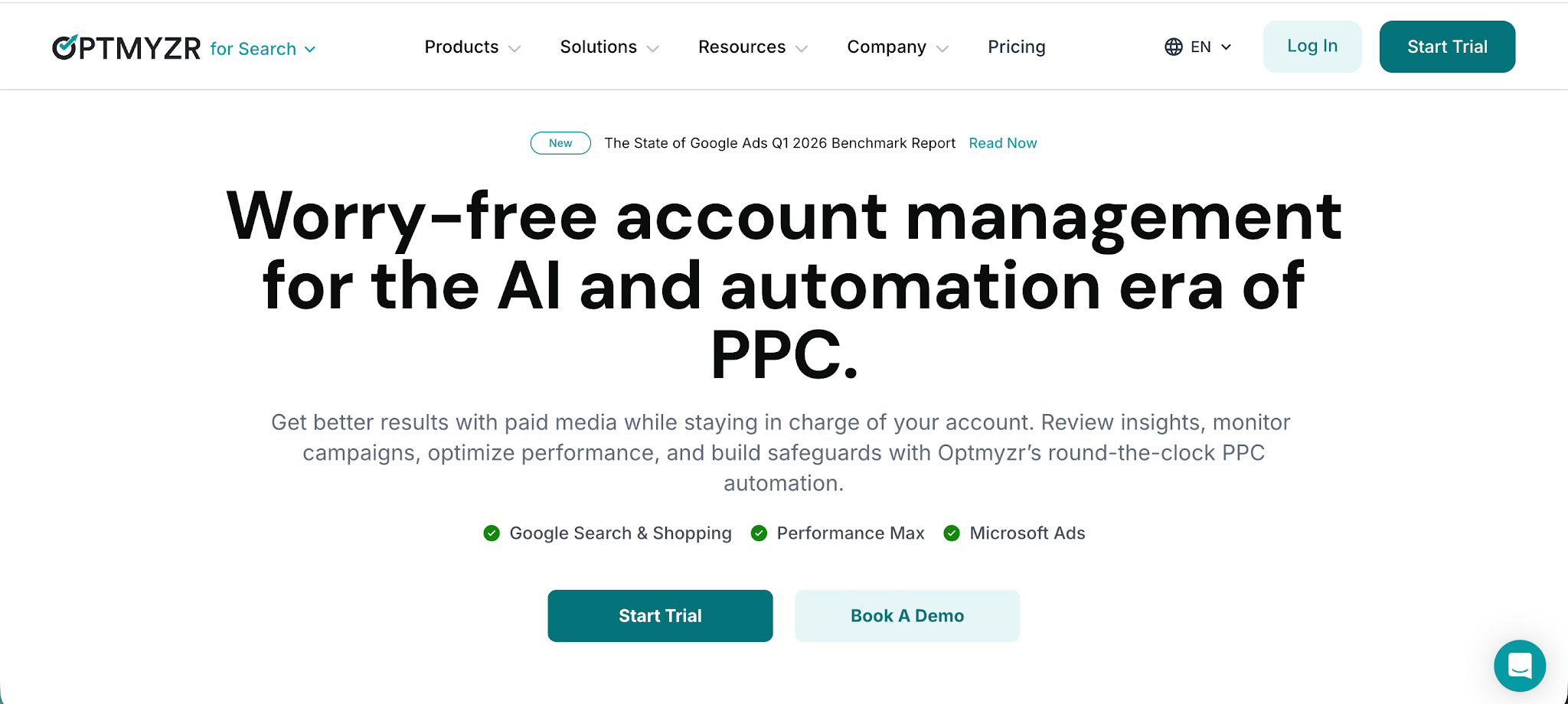
Optmyzr is a PPC management and optimization platform built for advertisers and agencies running large or complex paid search accounts. It is especially strong at automation, campaign monitoring, and workflow efficiency, making it popular with experienced PPC teams managing high volumes of ad campaigns.
Key features
- Campaign automation tools - Automates bidding adjustments, budget pacing, keyword management, and other repetitive PPC tasks.
- Advanced reporting dashboards - Combines PPC analytics tools and custom reporting for Google Ads, Microsoft Ads, and other platforms.
- Ad testing workflows - Helps advertisers compare ad variations and monitor performance changes across campaigns.
- Account optimization recommendations - Highlights opportunities around keywords, bids, budgets, ad groups, and campaign structure.
- Historical performance analysis - Uses historical data to help teams identify trends and optimize future campaign decisions.
Optmyzr is extremely useful for experienced PPC managers that need deeper control over large accounts. Its strongest area is improving operational efficiency for teams handling complex campaign structures across multiple clients or brands.
The downside is that it can feel overwhelming for beginners or smaller businesses. Teams running only a handful of campaigns may not need the platform’s level of automation and optimization depth, especially compared to simpler PPC management tools.
9. Wordstream

WordStream is a PPC tool built for businesses and agencies that want help managing and improving Google Ads, Microsoft Ads, and paid social campaigns without needing a full time PPC specialist. It focuses heavily on optimization recommendations, campaign management, and simplifying day-to-day advertising work.
Key features
- PPC performance grading - Analyzes campaigns and highlights opportunities to improve ad spend efficiency and overall account performance.
- Keyword research tools - Helps marketers discover new keywords, negative keywords, and search opportunities for PPC campaigns.
- Ad testing features - Makes it easier to compare different ad copy variations and identify which creatives generate better results.
- Cross-platform campaign management - Supports campaign monitoring and reporting across Google Ads, Microsoft Ads, and paid social channels.
- Optimization recommendations - Gives advertisers suggestions around bids, budgets, targeting, and campaign structure improvements.
WordStream works particularly well for smaller businesses that need guidance and structure around PPC management. Its biggest strength is simplifying campaign optimization for teams that are not deeply experienced with paid advertising platforms.
The downside is that advanced PPC teams may find the platform somewhat restrictive. While it handles ad testing and optimization well, it is less useful for deep attribution analysis, enterprise workflows, or highly customized reporting setups.
10. AdEspresso

AdEspresso is a PPC tool built for advertisers who want an easier way to create, test, optimize, and report on paid campaigns across Meta and Google Ads. It is especially popular with agencies and smaller marketing teams because it simplifies A/B testing and campaign management without requiring deep platform expertise.
Key features
- A/B testing tools - Lets marketers test audiences, creatives, headlines, and ad copy variations to identify winning combinations faster.
- Performance reporting dashboards - Tracks ROAS, CPC, CTR, conversions, and other PPC metrics across campaigns in one interface.
- Automated optimization rules - Helps advertisers pause underperforming ads and shift budget toward campaigns producing better results.
- Bulk campaign management - Makes it easier to edit, duplicate, and organize large numbers of ads and ad sets quickly.
- Custom reporting tools - Generates client-friendly reports with charts, export options, and white-label branding.
AdEspresso does a very good job simplifying campaign testing and optimization workflows. Its strongest area is helping advertisers rapidly test creatives and reduce wasted ad spend without constantly jumping between native ad platforms.
The downside is that it focuses more on campaign management than deep competitor analysis or advanced attribution reporting. Larger advertisers running highly complex PPC operations may eventually outgrow the platform and move toward more enterprise-focused tools.
11. Wask.co

Wask.co is a PPC automation and campaign management platform built for smaller businesses and marketers that want simpler advertising workflows without relying heavily on agencies or technical specialists. It focuses strongly on campaign optimization and automation, especially for teams managing Meta and Google Ads with limited time or experience.
Key features
- Campaign optimization tools - Helps advertisers improve targeting, budgets, and bidding without manually adjusting campaigns every day.
- Cross-platform ad management - Manages Google and Meta advertising campaigns from one interface.
- Audience targeting suggestions - Recommends audiences and targeting adjustments based on campaign performance data.
- Performance reporting dashboards - Tracks conversions, ROAS, CPC, CTR, and other campaign metrics in centralized reports.
- Budget automation - Automatically pauses, scales, or adjusts campaigns based on predefined performance conditions.
Wask.co is built more for simplicity and automation than deep analytics. Smaller teams often like how approachable the platform feels compared to enterprise PPC software packed with advanced configuration options.
The downside is that experienced advertisers may eventually outgrow it. Teams running very large campaigns or needing advanced attribution analysis, custom reporting logic, or enterprise workflows may find the platform somewhat limiting over time.
12. Databox

Databox is a reporting and analytics platform built for marketers who want all of their PPC data in one place without spending hours building dashboards manually. It is especially useful for agencies and in-house teams running campaigns across Google Ads, Meta, LinkedIn, and Microsoft Ads that need fast visibility into performance trends and ad spend.
Key features
- PPC dashboard templates - Includes pre-built dashboards for tracking ROAS, CPC, conversions, CTR, and other ppc campaigns metrics.
- Cross-platform reporting - Combines data from Google Ads, Microsoft Ads, GA4, Meta Ads, HubSpot, and other marketing tools.
- Custom KPI tracking - Lets teams create dashboards around the exact metrics most important to their campaigns and clients.
- Automated reporting - Sends scheduled reports and live dashboards to internal teams or external stakeholders.
- Performance alerts - Notifies marketers when campaign metrics spike, drop, or move outside expected ranges.
Databox works best as a reporting layer rather than a deep PPC optimization platform. It is excellent for centralizing campaign data and visualizing trends, but it does not focus heavily on attribution modeling or campaign automation.
The platform can also become cluttered if teams connect too many sources and dashboards at once. Advertisers looking for direct optimization tools, bid management, or keyword automation may still need additional PPC software alongside Databox.
Great campaign management starts with accurate data and analyses
PPC campaigns generate huge amounts of data, but data alone does not improve performance. What actually matters is being able to spot trends early, understand where conversions are really coming from, and make decisions before wasted spend starts piling up.
Some advertisers need deeper keyword research. Others care more about attribution, automation, competitor monitoring, or reporting across several ad platforms. The best PPC analysis tool depends less on company size and more on how complex your campaigns have become.
As budgets grow, relying only on native ad platform reporting becomes risky. Platforms naturally want to take credit for conversions, and that can lead to misleading optimization decisions if you do not have a clearer view of profitability and customer behavior across channels.
If you want cleaner PPC reporting, better attribution visibility, and an easier way to connect ad spend directly to revenue, wetracked.io is the secret weapon you need in your arsenal. It gives ecommerce brands a much clearer picture of campaign performance without burying teams in overly complicated dashboards.
Try it today, completely free.


